• Our Christmas Campaign

    Our Christmas Campaign

    A huge thank you to everyone who entered our Christmas Raffle this year. Your generosity and support have helped us raise £26,966 and we couldn’t be more grateful!

    We’re especially thrilled to share that, thanks to the funds we raised, we are launching our first ever fully-funded placement in 2026. An incredible milestone made possible by our generous supporters and trust who match funded all Day 1 ticket sales.

    11–12 December
    You’ll receive your raffle tickets via email. Be sure to check your inbox (and your spam folder, just in case!).

    Tuesday 16 December
    We’ll be announcing the raffle winner and the runner-up prize recipient on our social media channels and right here on this page.

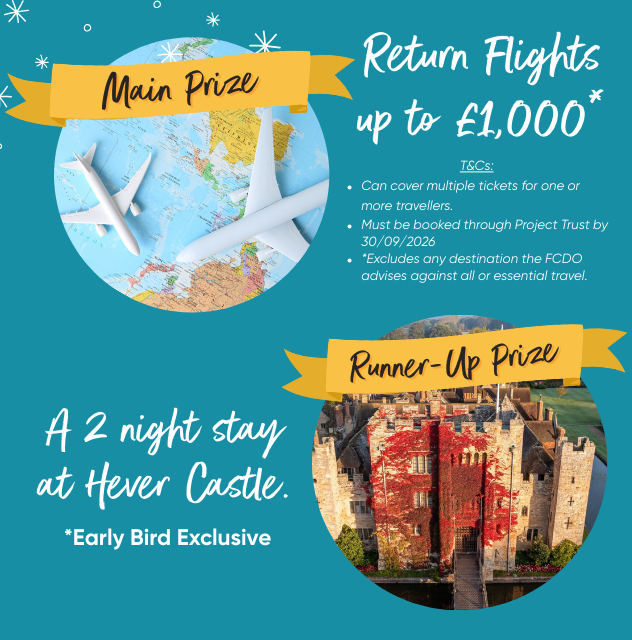
    Here’s a quick reminder of the incredible prizes we have on offer..

    Main Prize

    £1,000 towards flights to a destination of your choice*

    Your dream escape awaits, you might be the lucky winner who could turn this Christmas into the beginning of a trip of a lifetime.


    *Excludes any destination the FCDO advises against all or essential travel.
    This prize can cover multiple tickets for one or more travellers. Flights must be booked through Project Trust by 30/09/2026.

    Runner-Up Prize

    A two-night luxury getaway at the historic Hever Castle
    This exclusive prize is reserved for those who entered via our Early Bird link, a perfect chance to unwind in a truly magical setting, once the family home of Anne Boleyn .

    With Special Thanks

    A huge and heartful thanks goes to the following:

    Our Day 1 Match Fund Supporters:

    Souter Charitable Trust, The Jeremy Willson Charitable Trust, Ben St Joseph Trust, Robbie Robertson, The Anson Charitable Trust, The Janelaw Trust, The Allan & Nesta Ferguson Charitable Trust

    Our Big Give Pledge Supporters:

    Cray Trust, The Alchemy Foundation, Ivor Dunbar

    Our Champion Funder:

    The Reed Educational Trust Ltd


    Want to Become a Regular Supporter of Project Trust?

    Your ongoing support helps us continue creating meaningful, life-changing opportunities for young people around the world. If you’d like to make a lasting impact, here are ways to become a regular donor:

    • Set up a monthly donation through our website.
    • Sponsor a placement, helping ensure more young people can access global volunteering opportunities.
    • Encourage workplace giving or payroll giving through your employer.

    Every recurring gift—big or small—helps sustain our mission and future placements. Thank you for considering ongoing support.
  • From Classroom to Confidence: Jamie’s Year Volunteering in Thailand

    From Classroom to Confidence: Jamie’s Year Volunteering in Thailand

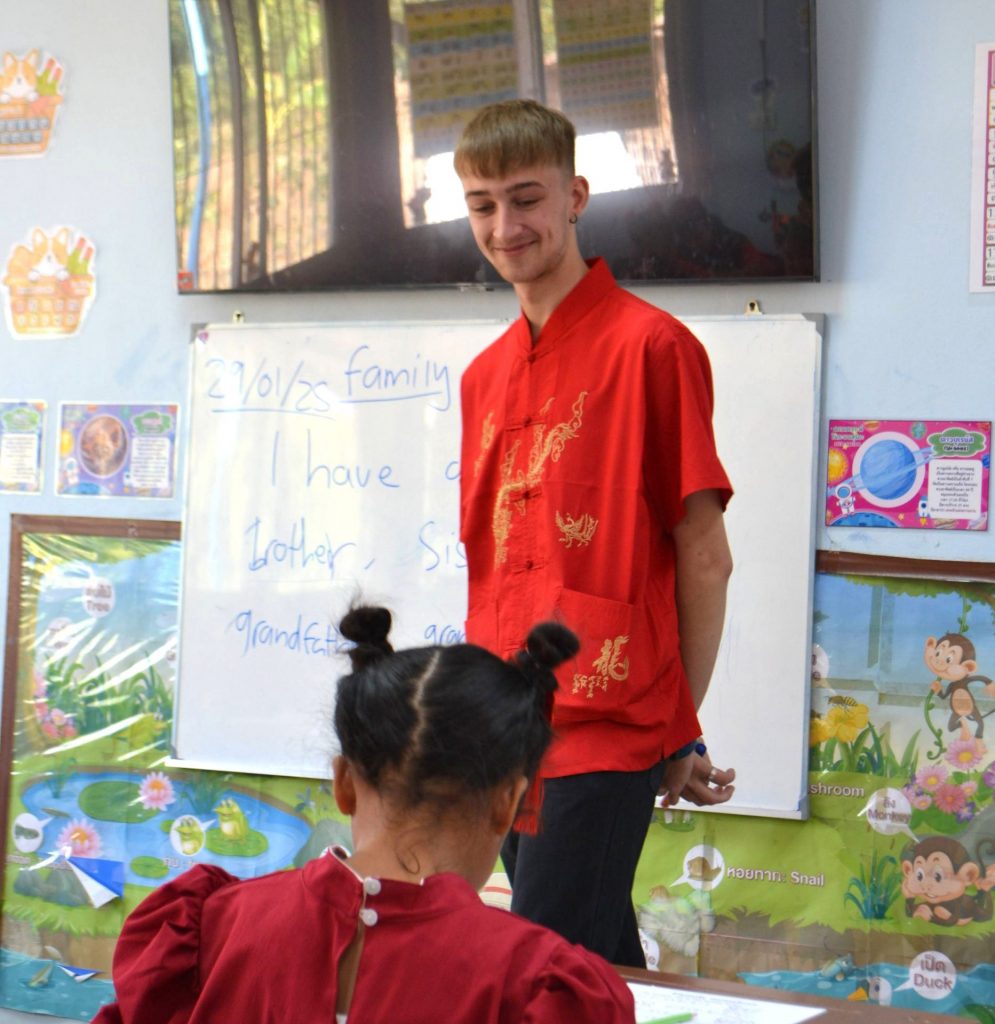
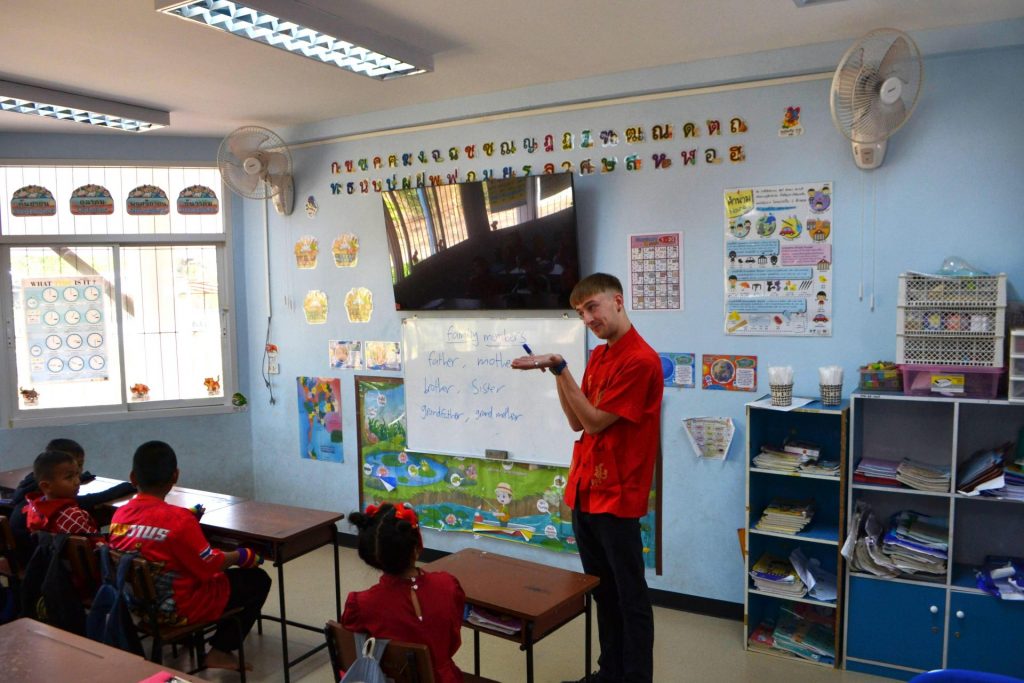
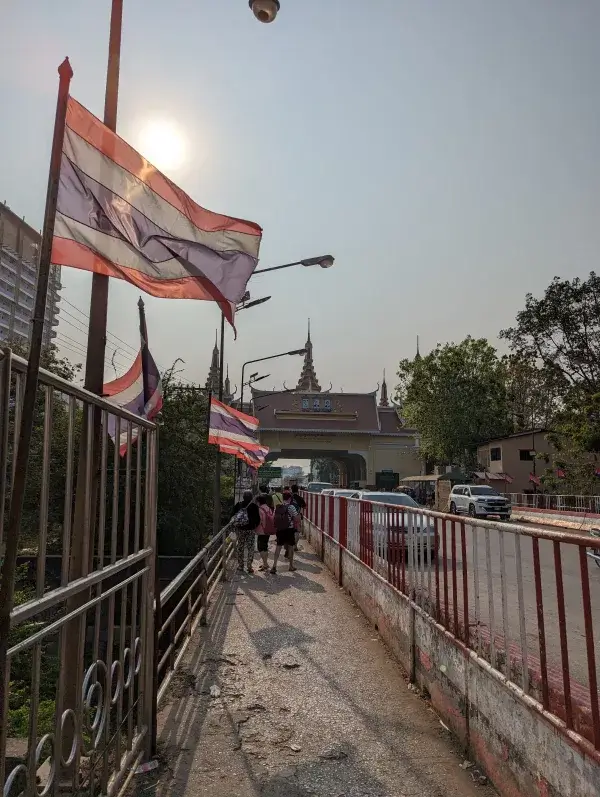
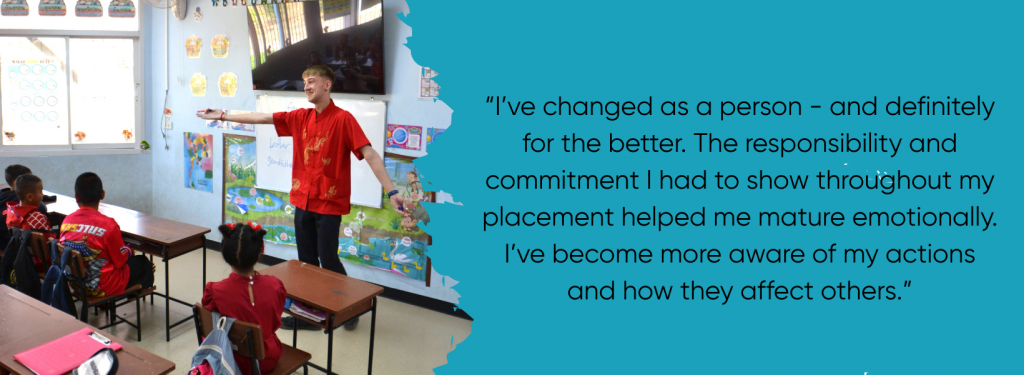
    When Jamie travelled to Thailand with Project Trust in 2024, he didn’t just set out to teach English, he set out to learn. A year on, he reflects on how his experience has shaped him, what he learned from his students and community, and how it’s influenced what comes next.

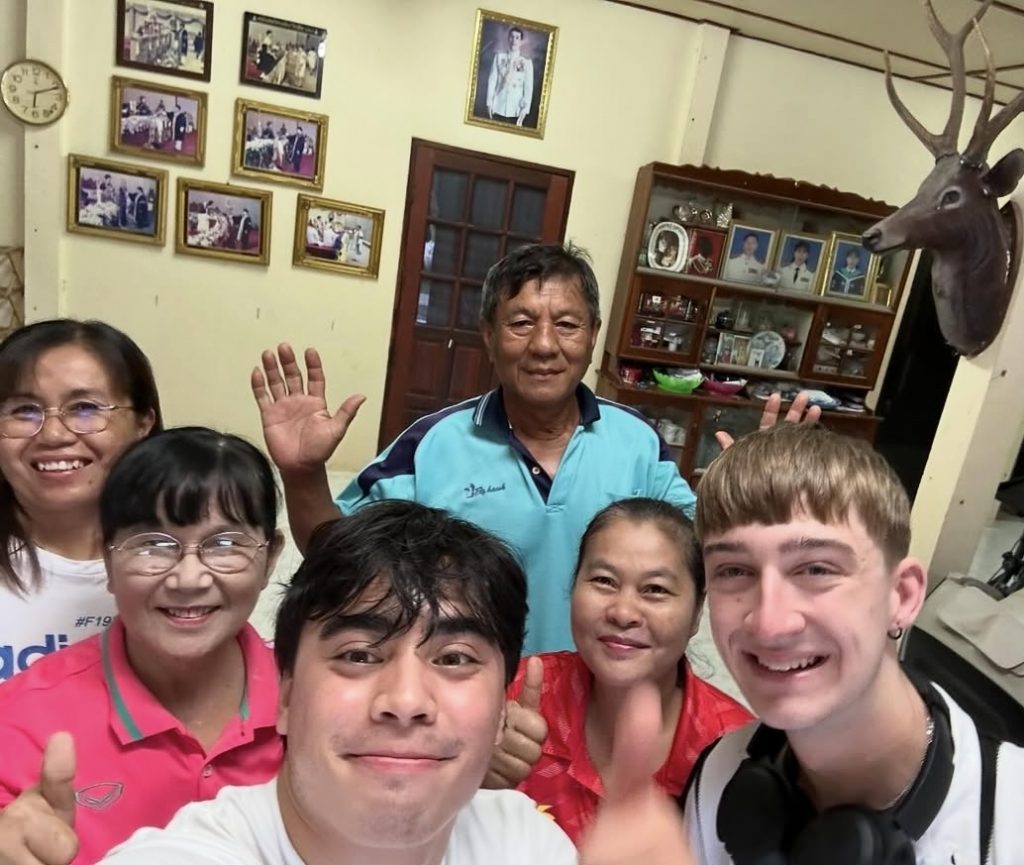
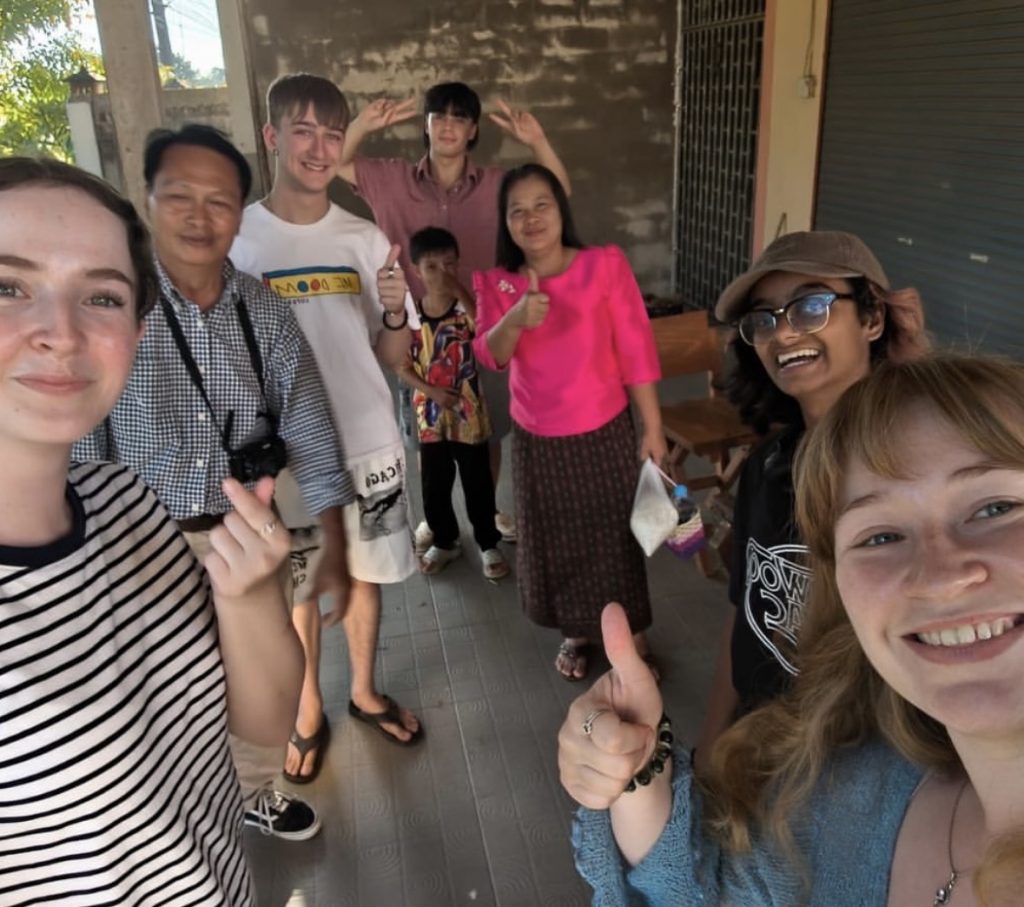
    Living and working in a small Thai village opened Jamie’s eyes to new perspectives and ways of life.

    “I’ve met people with completely different world views,” he explains. “Having conversations that challenge how I think about things has been so valuable. Coming to a different country and being thrown into an unfamiliar environment really made me learn to adapt, respect, and embrace new ways of doing things.”

    For Jamie, the most meaningful part of his year was the connection he built with his students.

    “Seeing the progress the kids are making is incredibly inspiring,” he says. “Watching their English improve and knowing I have played a part in that gave me such encouragement. Building those connections has been really special.”

    Communication was a challenge at first, but one that taught him some of the most lasting lessons. “Very few people in my village spoke English,” Jamie recalls. “So I had to find other ways to express myself paying attention to my tone, emotion, even using technology to get my point across. My confidence grew so much. Being the only white person living in the village was a big thing to overcome.”

    Alongside practical teaching skills, Jamie says the cultural lessons he learned will stay with him for life.

    “Thai people are very dedicated, they work hard and take real pride in what they do. Everyone has their responsibilities, and they do them with such commitment. It’s something I really admire and hope to bring into my own work in the future.”

    From Thailand to Technology

    After returning from Thailand, Jamie decided to take a new direction.

    “I chose to go into an apprenticeship in IT rather than university because that style of learning suited me more,” he explains. “I was a bit worried about finding a placement as I didn’t do the best in my A Levels, but that fear disappeared quickly as I had several interviews within a few weeks of coming home.”

    In one of those interviews, Jamie discovered an unexpected connection.

    “The Chief Security Officer of the company I was interviewing for had also done a gap year in Thailand when she was younger,” he says. “That gave me a real boost of confidence in the interview and a few hours later I got the call saying I’d got the job. It was such a relief.

    Jamie’s new apprenticeship has already given him the chance to put his volunteering skills to use.

    “My year out definitely helped my confidence levels and my readiness to speak to people I wasn’t familiar with, ” he says. “It also did wonders for my communication skills – learning how to articulate my ideas clearly was essential in Thailand, and that’s carried through to my job now.”

    Looking back, Jamie believes his Project Trust experience was a key factor in securing his apprenticeship.

    “In my case, my gap year might have been the difference between getting the job and still looking,” he reflects. “My boss had done something similar to Project Trust so knew the kind of person you have to be to complete one. Even just having it on my CV helped get my foot in the door.”

    Jamie’s story shows how a Project Trust placement goes far beyond a year overseas — it builds resilience, adaptability, and the confidence to take on new challenges. From the classroom in Thailand to the start of a new career in IT, his experience is a reminder that the lessons learned through volunteering can open doors for years to come.

    Learn more about Volunteering in Thailand here.

  • Volunteering in Honduras: Dylan’s Experience with Project Trust

    Volunteering in Honduras: Dylan’s Experience with Project Trust

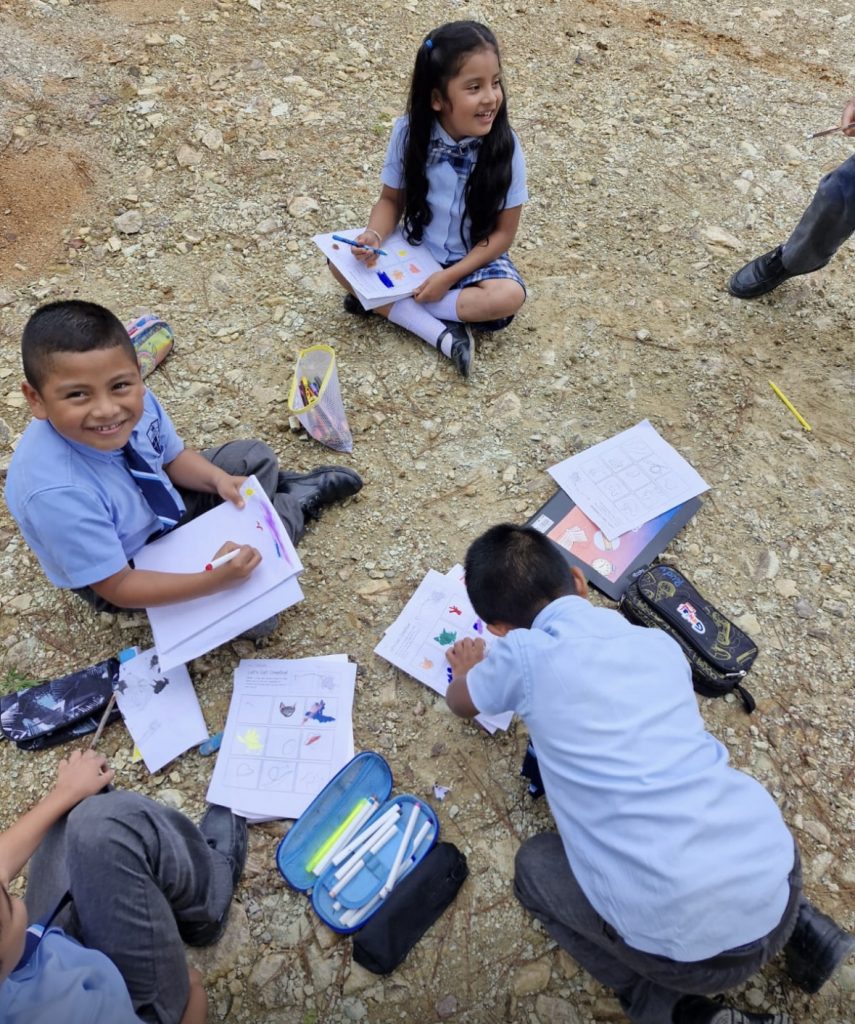
    We recently heard from Dylan Stevens, one of our volunteers currently teaching in Honduras. Dylan is eight weeks into his year abroad and kindly shared some reflections (and wonderful photos!) about his experience so far.

    Volunteering in Honduras has been absolutely amazing. I’m currently eight weeks into my 12-month placement (which I’m very glad I chose), and it’s already been the best eight weeks of my life.

    I’ve been teaching incredibly energetic – but of course, lovely – children, travelling around Honduras and beyond with other Volunteers, and embracing a completely different culture. Every day feels new and rewarding, and I’ve already learned so much about myself and the world around me.

    The idea to volunteer internationally came to me quite unexpectedly. At the start of Year 13, I attended a careers day at Sixth Form, not really expecting to hear anything that would change my plans -I was already set on going to university. Then I heard about the fantastic work that Project Trust does across the world, and I had a sudden thought: “Why not?” Despite normally being quite hesitant with big decisions, I knew that helping to provide education within a community abroad would be an incredibly rewarding experience – not just for my own personal growth, but for the next generation too.

    Project Trust has been there every step of the way – from helping me prepare for a year away (including guidance with fundraising!) to making sure all the legal and logistical parts of travelling abroad go smoothly behind the scenes. Their years of experience and genuine support have made a huge difference. I’d definitely recommend them to anyone thinking of taking this path.

    It would be a lie to say that fundraising was easy – but with the amazing support of those around me, I made it. Friends, family, co-workers, and both local and national businesses all chipped in to help make the pennies count. The Fundraising Support team at Project Trust also shared great tips and advice that helped me stay motivated and organised.

    If I haven’t made it clear enough already, I’m absolutely over the moon with my decision to volunteer with Project Trust. I didn’t know anyone else doing something like this, and I was definitely a bit nervous at first, but it’s turned out to be the best decision I’ve ever made.

    I’d recommend a gap year like this to anyone- whether it’s before university, while figuring out your future career, or simply to see more of the world and make a difference while you do.

    Find out more about volunteering in Honduras here.

  • Statement from the Project Trust Board of Trustees

    Statement from the Project Trust Board of Trustees

    The Board of Trustees at Project Trust has recently announced a change to its operating model and its intention to sell its properties on Coll.

    The COVID pandemic necessitated a significant change to Project’s operating model with Volunteer selection courses being held online. While this was initially anticipated to be a temporary measure it is now clear that this model far better matches the expectations of young people in the 2020s and has been very successful.

    As a result, the residential facilities at Ballyhaugh (the Hebridean Centre) are used for only three weeks of the year.   Running costs for the Hebridean Centre are significant, and as a charity, the Board cannot justify retaining property that is costly to maintain and greatly underused. 

    Meanwhile, although Volunteer numbers have been slowly rising since COVID, the current situation is not sustainable and there is a need to release funds and replenish reserves in order to secure Project Trust for the long term. As a result, after long and very careful consideration, the Board has concluded that we must sell our remaining properties on Coll.  They will be put on the market in the spring of 2025.

    The Board’s aim is to safeguard employment and ensure the charity is ready to face any future challenges.  Over 75% of staff already work remotely and the intention is to move to a 100% virtual staffing model, including those living and working on Coll.

    Project Trust is proud of its Scottish heritage and is committed to retaining Volunteer activities in Scotland and, as was the case in Project Trust’s early days, the charity will rent a residential centre in Scotland for training and debriefing.

    Since the pandemic, Project Trust’s presence and financial impact on the Isle of Coll have been much reduced.  The sale of underused property has the potential to have a positive impact on the people and economy of the Isle of Coll and we hope that this is the case.

    The Isle of Coll will always be central to Project Trust’s history. Generations of Volunteers and staff are deeply grateful to the Coll community for being an integral part of their Project Trust experience. 

    Steve Price-Thomas OBE

    Chair

    Project Trust

  • Building a library in Ghana, Maisie and Lena 24/25

    Building a library in Ghana, Maisie and Lena 24/25

    News Story: Building a library in Ghana, Maisie and Lena 24/25

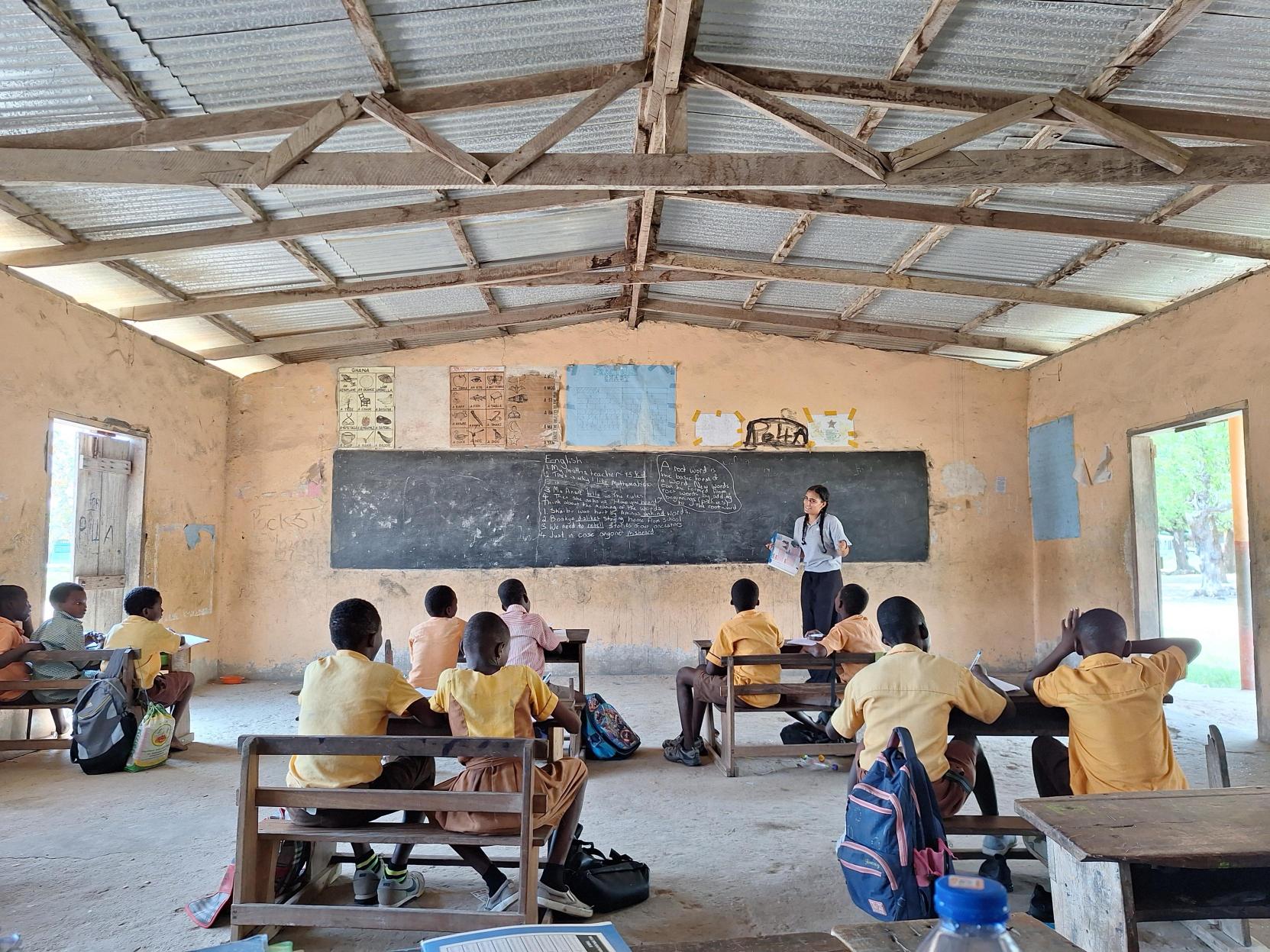
    During our year in Ghana, we wanted to leave something lasting behind for the school: a library. While teaching at A. A. Fia Basic School, we quickly noticed a gap in students’ learning: although many were fairly confident in spoken English, they struggled with reading and writing. As lifelong bookworms ourselves, we believed that access to books could make a real difference in bridging that gap.

    Our plan began months in advance, but as so often happens, time slipped away and obstacles appeared. Suddenly, with just over a week left, we still had no library. Determined not to give up, we threw ourselves into fundraising, and thanks to the generosity of family and friends from all over the world, we quickly raised £800 for books.

    That weekend, we travelled to Accra, the capital of Ghana, where we spent one long day book shopping. With limited funds, we aimed for variety, choosing books for every age group, from KG1 to JHS3. We also made a deliberate choice to focus on storybooks rather than syllabus texts. At the school, we had seen that classrooms lacked storybooks entirely, and we wanted children to have the chance to read for pleasure, not just for exams. It was also important to us that they could see themselves in the characters of the books, so we made sure to buy as many as possible set in Ghana, written by Ghanaian authors.

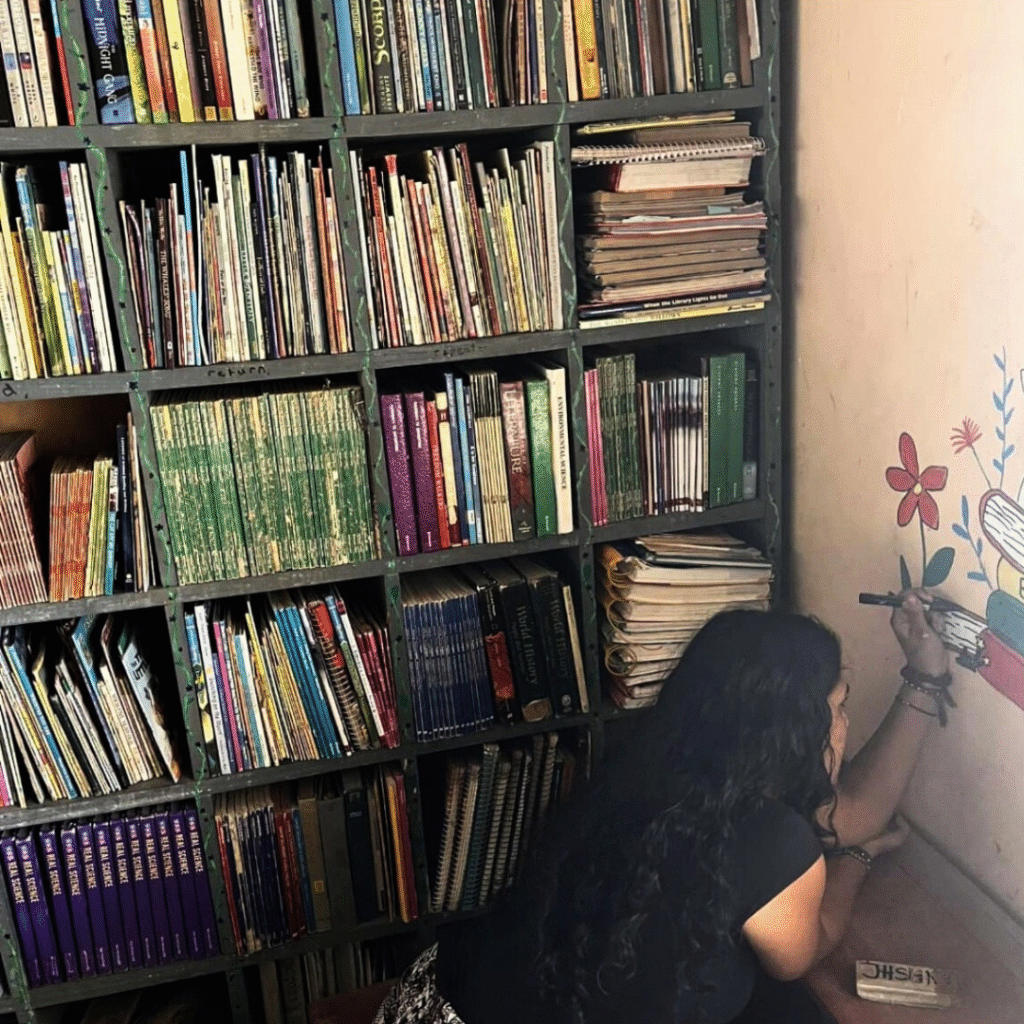
    After a hectic day in Accra and a long four-hour journey back home with a suitcase full of books, we had done it. Payment had gone through, books were acquired, and we were ready to begin converting an abandoned classroom into a library. Although we managed to buy slightly fewer books than we had hoped, we were able to combine them with the school’s smaller existing collection to create a respectable bookshelf full of them.

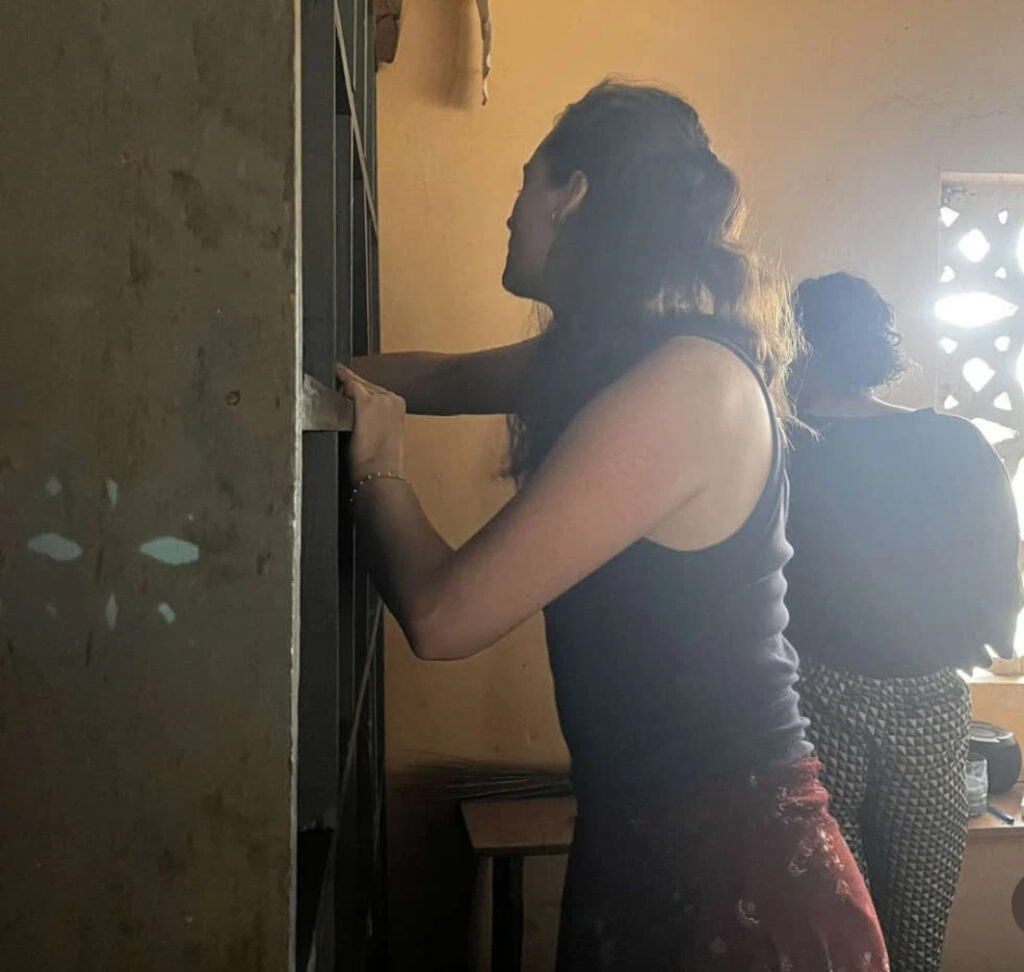
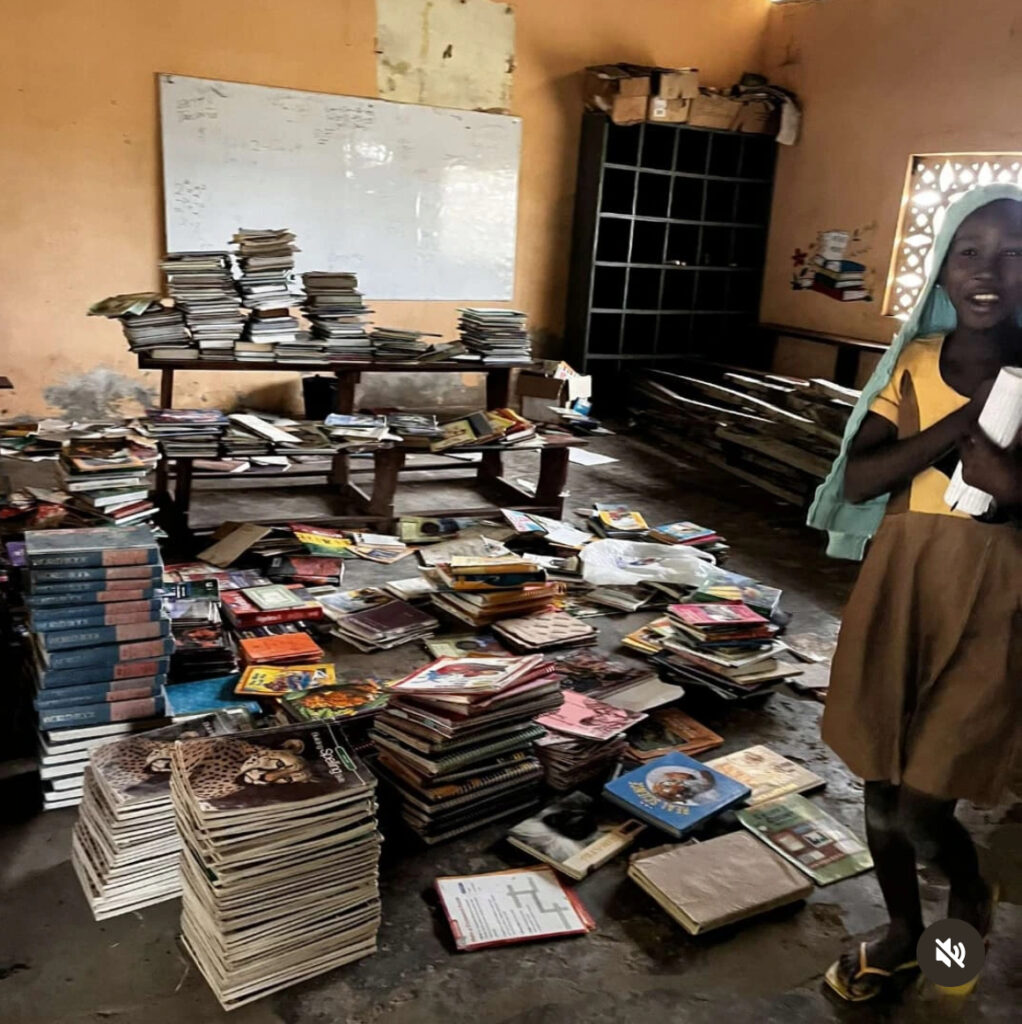
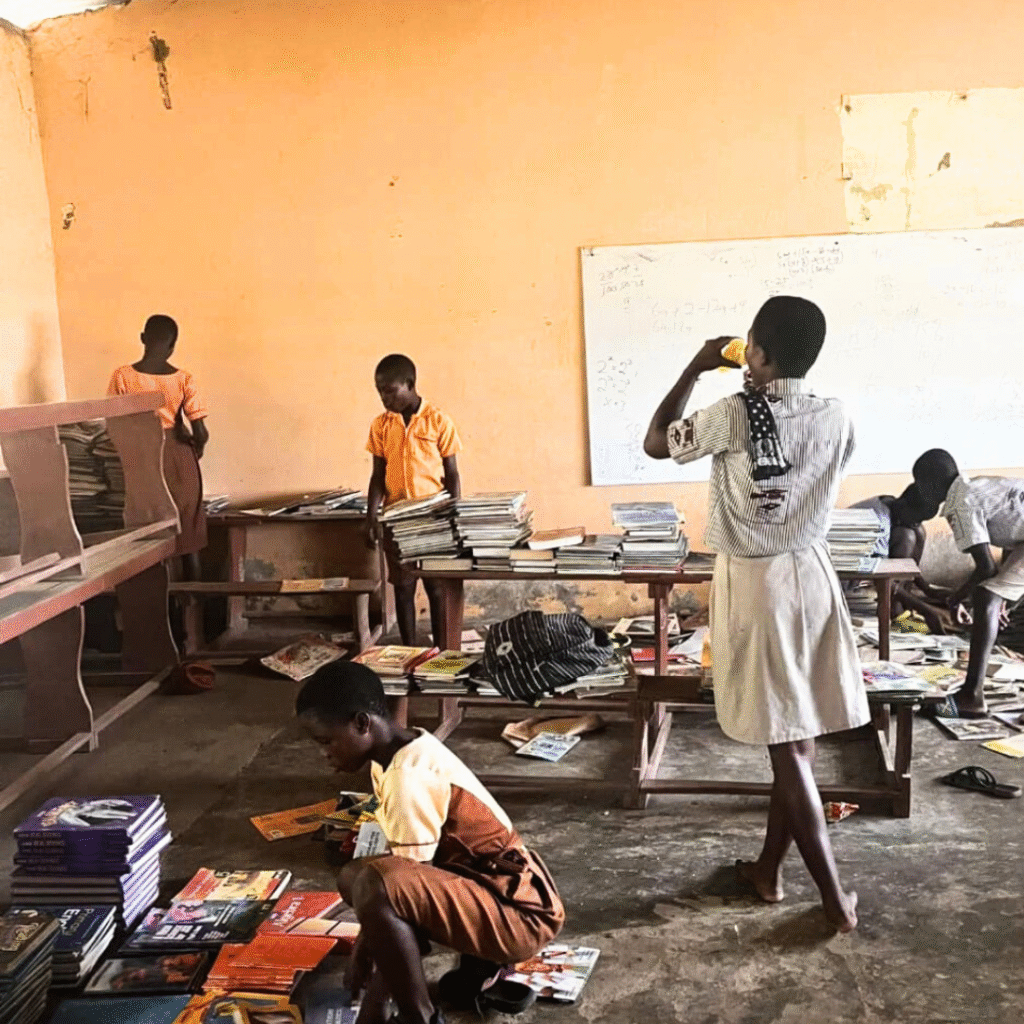
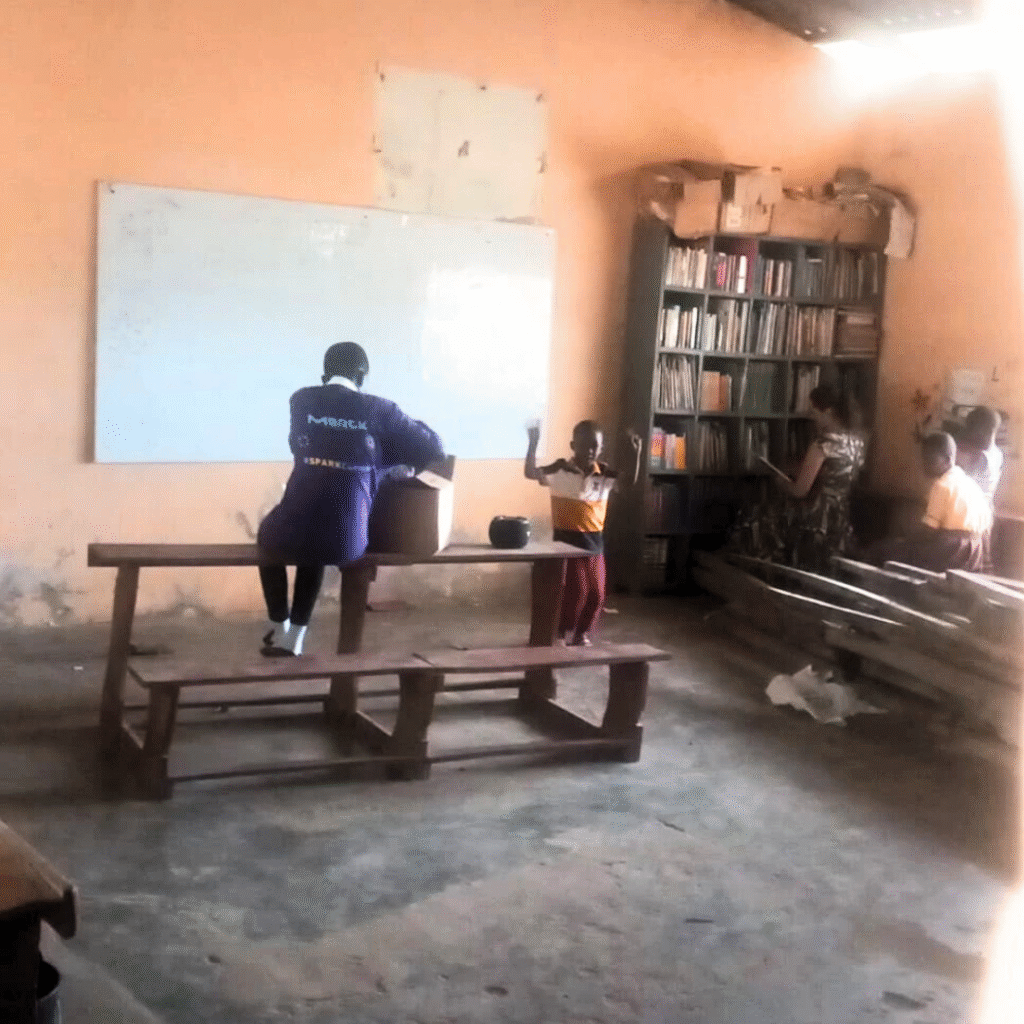
    The next morning, the real work began. The classroom we hoped to use had been empty for some time, but it still had a large bookshelf that could be repurposed. We were joined by a group of our students who, having just finished their exams, were eager to help. Together, we cleared out the room, cleaned and dusted, sorted through stacks of old books (including one set from 1960!), and organized the new ones from beginner level through to more advanced. Maisie painted a mural to brighten up the space, and by the end of two very full days, the dusty classroom had been transformed into something that truly looked like a library.

    The best part of the process wasn’t the finished room but seeing how quickly the children took to it. Even as we were still unpacking, some of the students who usually found English lessons boring were already sitting down with books, completely absorbed. At the end of each day, we read together, and it was amazing to see them learn and use new words almost immediately. It showed just how much potential there was once books were simply available.

    We’re deeply grateful to everyone who supported our fundraising, and to the Headmaster, Sir Isaac Sallah, for giving permission to use the classroom. Our hope is that the library will keep growing and continue to give students the chance to read, explore, and learn for many years to come. Go Back

  • Race Across the World with Project Trust

    Race Across the World with Project Trust

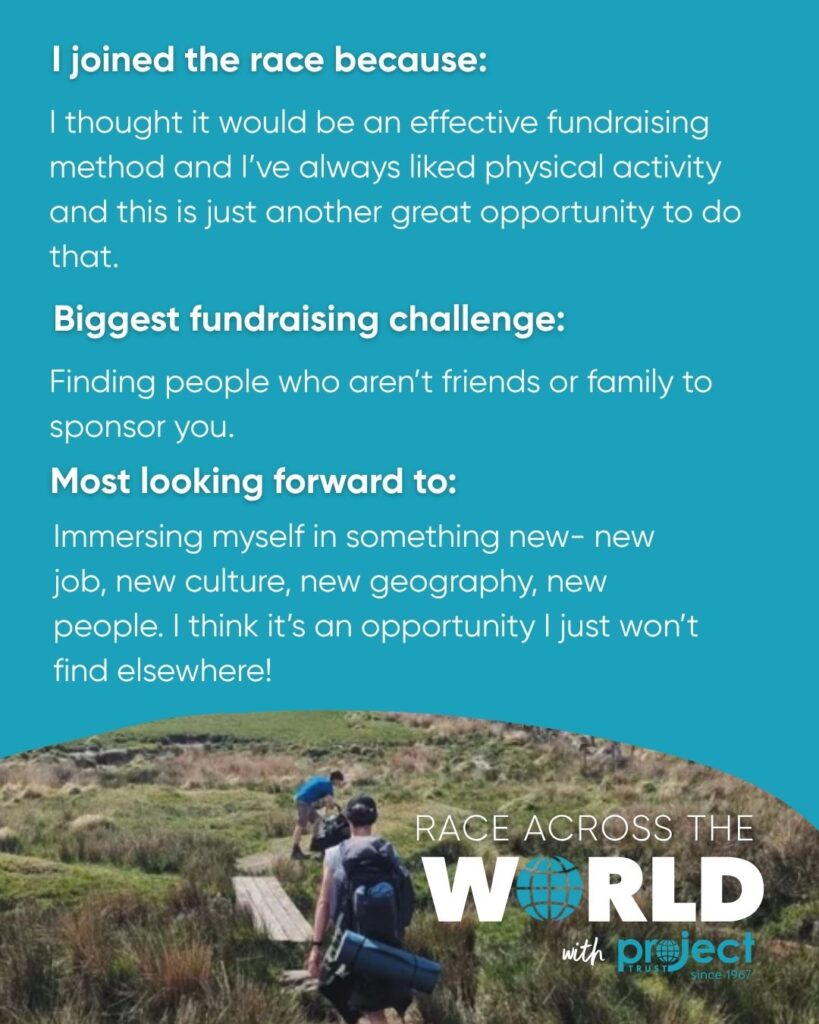
    We are excited to share that our Race Across the World challenge is in full swing. 

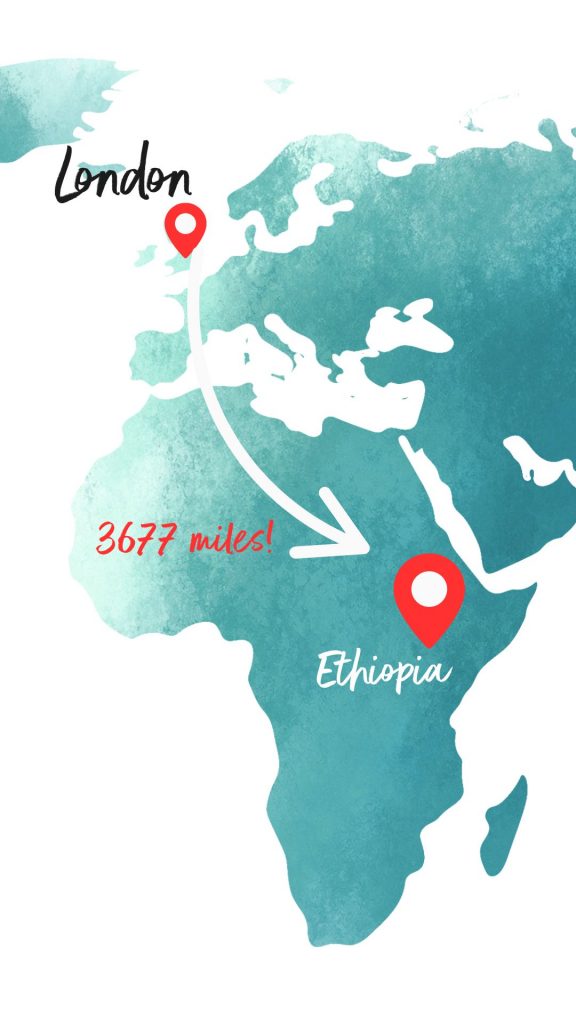
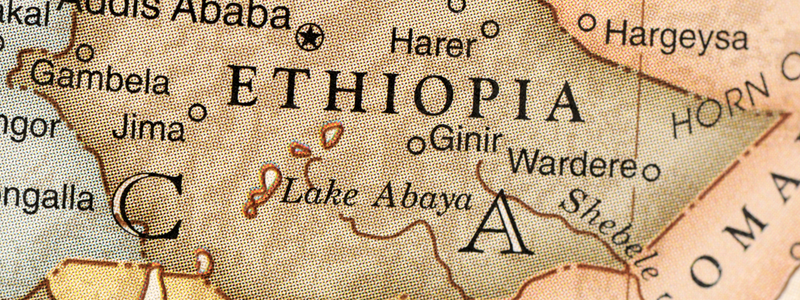
    Over 60 of our currently fundraising Volunteers are racing in teams to cover 3,677 virtual miles – the distance from London Heathrow to Ethiopia, where Project Trust’s very first project began back in 1967. 

    These incredible young people are running, walking, cycling, swimming, and more to raise the funds they need to make their international placements a reality.

    Plus, they’re not going it alone. Over 50 Project Trust Alumni have offered a helping hand, joining in to bag the miles, share encouragement, and show what it means to stand behind the next generation of Volunteers.

    This is the first time Project Trust has launched a campaign specifically to support Volunteers’ fundraising efforts – a reflection of just how tough it has become for young people to raise what they need.

    Become a Final Sprint Supporter

    As we prepare for the final stretch of our Race Across the World campaign, we are asking Alumni to become Final Sprint Supporters and help our Volunteers reach the finish line. 

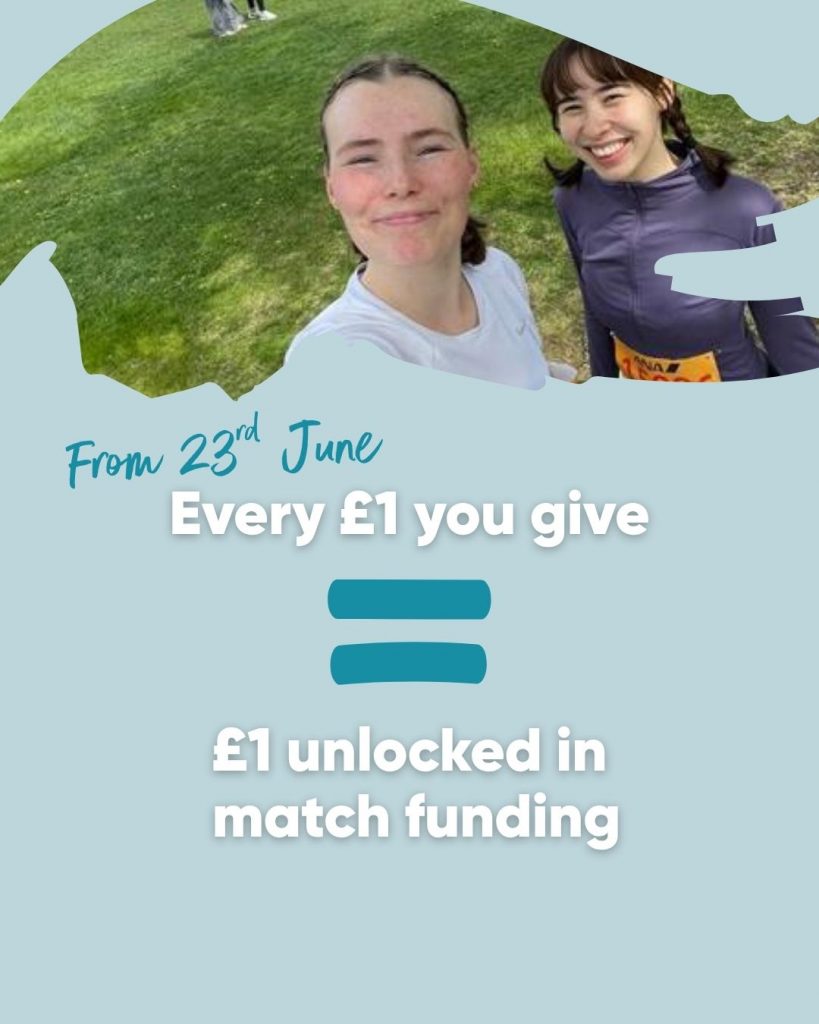
    From 23rd to 29th June, every donation will be doubled through our Match Fund Campaign. By becoming a Final Sprint Supporter, you’re pledging your support for the final week of our campaign, when every donation will be matched. 

    Your gift will directly help Volunteers overcome financial barriers and reach their placements this September.

    Follow our Instagram to track the Volunteer’s progress!

  • Kicking Back Stronger: Callum’s Journey of Growth and Resilience

    Kicking Back Stronger: Callum’s Journey of Growth and Resilience

    For Callum, football has always been more than just a game, it’s been a compass, guiding him through the twists and turns of life. Now volunteering in Ghana with Project Trust, his story is one of resilience, rediscovery, and the profound impact a year of volunteering can have on rebuilding confidence and restoring lost passions.

    Callum’s love for football was born in the back garden, playing with his two older brothers. After moving to Scotland in 2010, he joined a club to learn the basics, and by age six, he was proudly standing between the posts as a goalkeeper. For seven years, he dedicated himself to his first team, where football was both a passion and a source of stability.

    A pivotal moment came when he was scouted by a more competitive team after impressing a coach during a school match.  Callum made the leap, encouraged by supportive coaches and his proven skills on the pitch. This transition marked his first lesson in stepping out of his comfort zone, a theme that would echo throughout his journey.

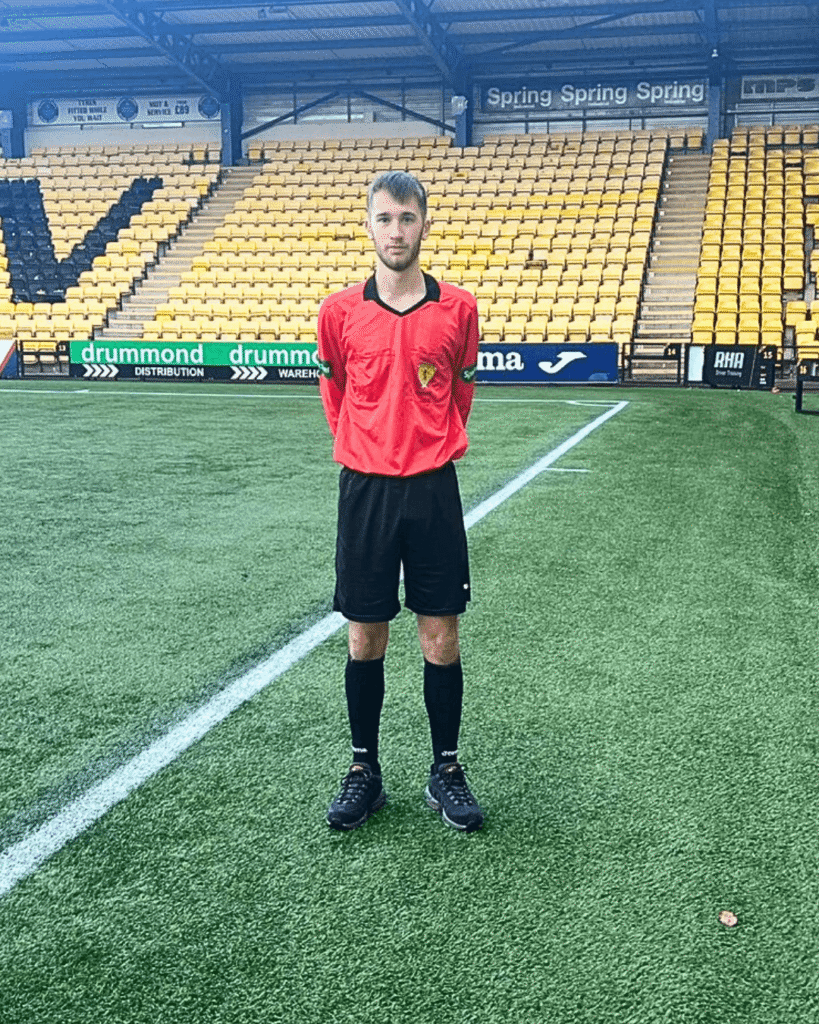
    In 2021, Callum faced a period of instability, moving between two teams in just six months. The uncertainty led him to question his future in football. However, a teammate introduced him to refereeing, and in October 2022, Callum officiated his first match. Instantly, he was hooked. Refereeing not only kept him connected to the sport he loved but also provided a newfound sense of purpose and ability to earn a wage from what he loved.

    Yet, football had more trials in store. In 2023, after struggling with limited playtime in a new under-20s team, Callum faced an even greater setback, he dislocated his shoulder just 10 minutes into the match. The injury left him feeling helpless, unable to play or referee, the very activities that had kept his passion for the sport alive. Callum was told that if he didn’t have surgery to stabilise his shoulder he would never play football again.

    The road to recovery was both physical and mental. Surgery was inevitable, and Callum approached it with determination, knowing it was the key to reclaiming his passion. Though the recovery sidelined him from refereeing temporarily, his resilience never wavered.

    Arriving in Ghana marked a turning point. Eager to reconnect with football, Callum quickly found a new home with the Kickers, a local team that welcomed him with open arms. Back on the pitch, he rediscovered not just his skills but also his strength and confidence in the sport. A fun fact about his new team, Kickers FC, is that one of their former players, Terry Yegbe, was born in their town Akatsi, represented the Kickers in his youth, and is now playing internationally for Ghana.
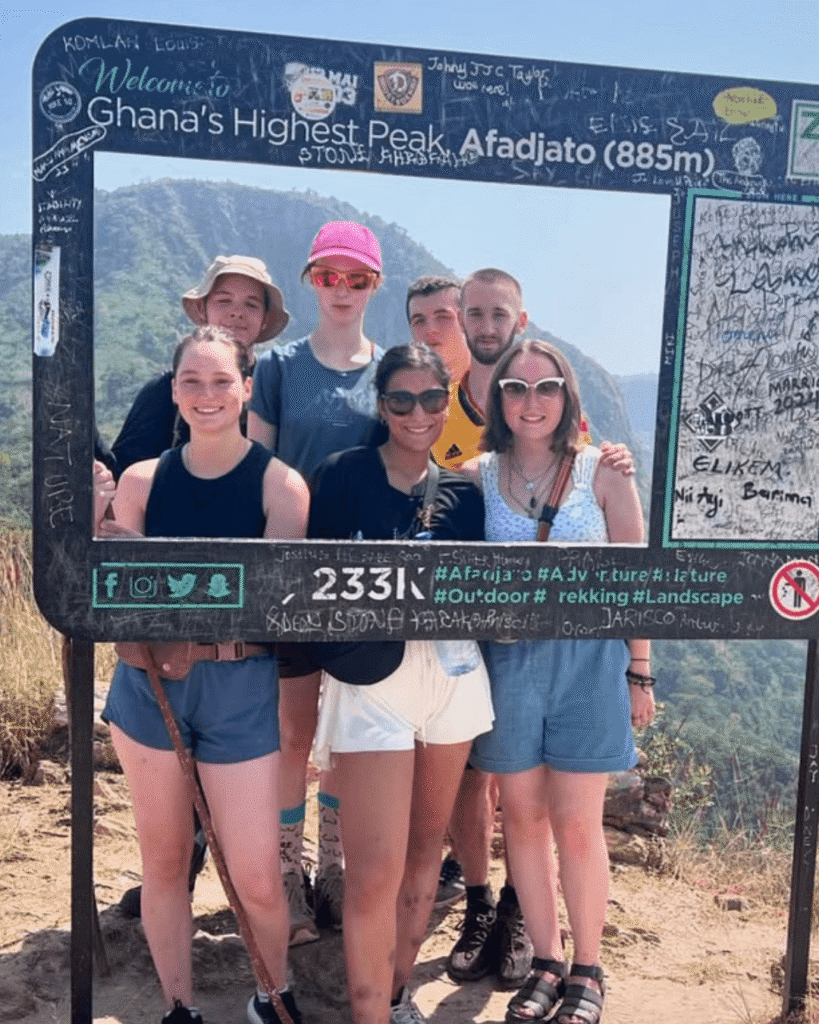
    The friendships he’s formed and the mentorship from his Coach Alex, fondly known as ‘The Don’ have been instrumental in his journey.

    Below: (Left) Callum with his country group

    (Right) and with Coach Alex on the left.
    Callum’s story is more than just a tale of sports and setbacks. It’s a testament to the transformative power of volunteering with Project Trust. Through his year in Ghana so far, he’s not only rebuilt his relationship with football but also rediscovered parts of himself he thought were lost. His journey shows that sometimes, stepping away from the familiar and immersing yourself in a new environment can be the most profound path to personal growth and empowerment.
    Find our more about Volunteering in Ghana here

  • Pick Ups for Ukraine

    Pick Ups for Ukraine

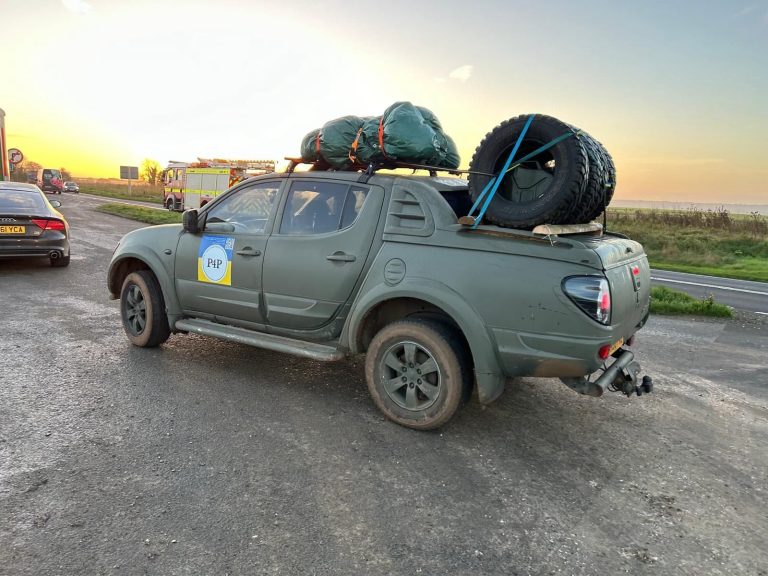
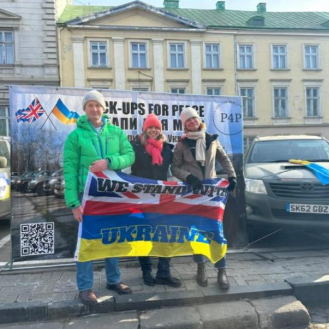
    Becs and I met nearly forty years ago when we volunteered together in Saos, Kenya. Like many Project Trust volunteers, we forged a strong bond and have remained close friends ever since. A few weeks ago, in mid-January, Becs phoned me and asked whether I would be interested in being a co-driver to deliver humanitarian aid and a donated 4×4 vehicle to Ukraine. Becs and her husband Tris had already completed this trip four times over the past two years, so despite initial nerves, I felt in good hands and agreed to help.

    We would be part of a 38-vehicle convoy under the P4P charity https://www.pickupsforpeace.co.uk/, who have already delivered over 570 second-hand vehicles and aid over the past few years. The vehicles were to be predominantly used for medical evacuation for wounded soldiers on the front line; delivering medical supplies; and helping with mine clearance.

    On Wednesday 19th February, we left the UK via the Eurotunnel in our Ford Ranger filled with medical supplies – surgical masks, syringe packs, bandages, face shields, iodine incise drapes, and other miscellaneous bits and pieces. The journey took us approximately 1,400 miles across Europe through France, Germany and Poland, where we crossed the border into Ukraine. Our final destination was the beautiful city of Lviv, which was about two hours from the border and required a full police escort: 38 vehicles, flashing lights, nose to tail, no stopping (even for red lights!) – an exhilarating experience, and Becs drove brilliantly.

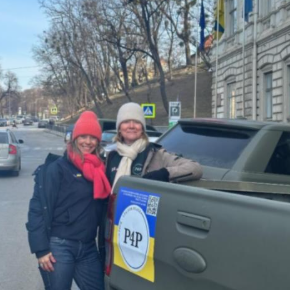
    After three days of travelling, we arrived in Lviv and handed over our vehicles and supplies to our Ukrainian friends. There was a lovely moment speaking to the Ukrainian soldiers and the Governor of Lviv, as well as meeting some MPs from the UK who were on their way to Kyiv. We then spent two nights in Lviv, which allowed some of us to visit a local hospital where some of the team were helping with prosthetic limbs; a potato farm that provided starch for a variety of uses in both food and health; a drone research centre; as well as a chance to see the beautiful city of Lviv – think Prague without the tourism.

    Our return trip involved coaches and minibuses, and most of the team flew back to the UK via Kraków. I did take the opportunity to visit Auschwitz; Becs had already visited after being part of a previous convoy.

    As I reflect on my trip, it’s clear that living here in the UK makes it very easy for world events to be out of sight and out of mind. Being in Ukraine helped to focus my thoughts, and I have been reflecting on what I experienced. There were moments of sorrow and sadness: listening to a priest read out the names of soldiers at a memorial service, looking at flags with the name, birth and death dates of soldiers, hugging a father grieving for his son. As well as moments of hope: watching an old lady light a candle in a Catholic church, climbing to the top of the Town Hall tower and seeing the city spread out in the sunshine, reading messages written on paper angels made by local schoolchildren. And moments of appreciation: standing in sub-zero temperatures being thanked by soldiers and townsfolk for our continuing support; standing arm in arm with a woman whose husband is currently fighting; buying a record from a local stallholder who, when he heard of what we had done, wanted a photo and gave a huge hug.

    My overarching impression is that although there is sadness, there is also hope, an appreciation of friendship and support, and immense pride. I would urge anyone who is interested in helping this charity https://www.pickupsforpeace.co.uk/ to either take part and/or donate a 4×4 vehicle and/or donate funds – there are lots of convoys being planned in the coming months, so it’s never too late.

    Kate Scott, Project Trust Alumni

  • The First Journey to Ethiopia- Chris Schenk

    The First Journey to Ethiopia- Chris Schenk

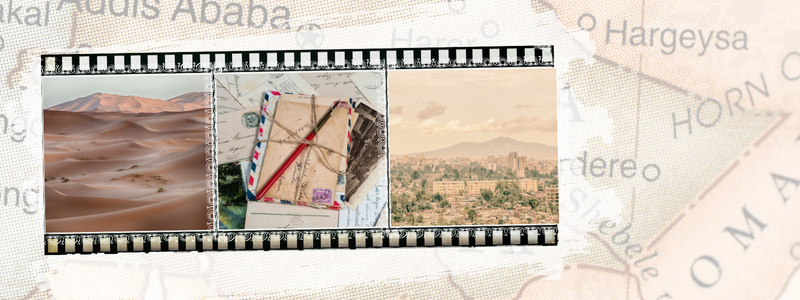
    My journey to Ethiopia followed the rules of ‘Race across the World’: I had no credit card, there were no smartphones, and I got to Ethiopia (though not to Addis Ababa) without flying. 

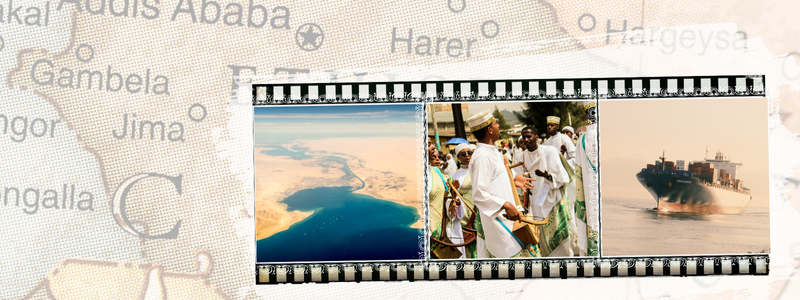
    Project sent me there to teach in the Abba Hanna Jimma School, run under the auspices of Prince Iskinder Desta, Haile Sellassie’s oldest grandson, who I think had been at school with Captain Bristol, as he was when I was recruited.  I was given passage on the Lion of Judah, an Ethiopian cargo ship, and boarded it in the East India Docks in London in July 1967.  I was one of only two passengers and we had our meals with the Dutch officers.  The first part of the voyage was full of interest, with stops in Rotterdam, Antwerp and Genoa, but then, instead of going through the Suez Canal, which was still closed after the Six-Day War, we embarked on a four-week journey around the Cape of Good Hope, with only one stop of three hours to refuel in Dakar, Senegal.  For the most part, it was extremely boring.  We only saw land as we passed South Africa, and were visited by a variety of sea-birds including a wandering albatross.  In desperation, I asked the Captain for a job and he gave me the task of typing out the ship’s manifest on a jumbo typewriter.  I had my eighteenth birthday on the 25th August, which I celebrated by presenting the officers with a bottle of port to drink after dinner.  I remember that it cost me seven shillings and six pence – properly duty free!

    Soon afterwards, we arrived in Assab, now in Eritrea, but then in Ethiopia.  Eritrea had been annexed by Ethiopia in 1962, giving Ethiopia a coast-line and allowing it to develop a navy.  Prince Iskinder Desta had been appointed the head of the navy, and his rank went up as the navy acquired new ships.  When I knew him, he was a Commodore.  Staff at the Navy base in Assab had been primed to look after me, and I was taken, on the evening I arrived, to a beach party to celebrate Ethiopian New Year.  The Ethiopian calendar is some seven years behind the Gregorian, so it was the beginning of 1960.

    A few days later, I was put on a plane to Addis Ababa.  I had never flown before and it was a magical experience, in a small plane flying low over the Danakil Desert and then up into the mountains, to arrive in Addis, some eight thousand feet above sea-level, and still in the rainy season, so it was cold and wet.  Later, in the dry season, I reflected that in 24 hours in Addis, you experienced the same range of temperatures as in a whole year at home.  By night it was chilly enough to need a coat, but in the afternoon it was a little warmer than a British summer’s day.

    My fellow Project Volunteer, Michael Coke, arrived by plane, shortly before term started and we were found a house within five minutes walk of the school, which we shared with Tim Beatty, whose father, Captain Beatty, was employed by the Ethiopian Navy to train their personnel in a camp in the hills above Massawa, far to the North of Addis.

    My only means of communicating with home was by letter, and when I arrived there were several waiting for me in the post restante at the main Post Office in Addis.  It took about ten days for letters to arrive, so nearly three weeks for an exchange of correspondence.  Only once, during my time in Ethiopia, did I speak to my family on the phone.  It was a laborious and costly experience.  I booked a three minute call shortly before Christmas, and was put through at the main Post Office, with the pips going very soon after I began to speak!

  • International Volunteer Day 2024

    International Volunteer Day 2024

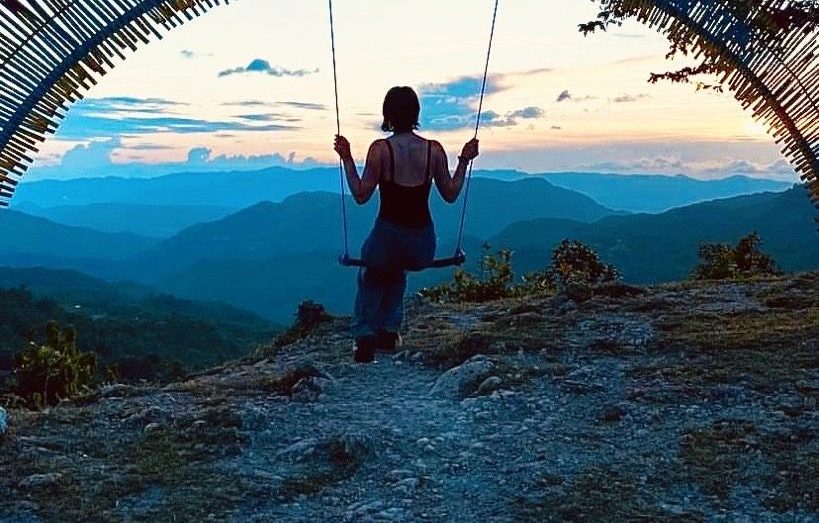
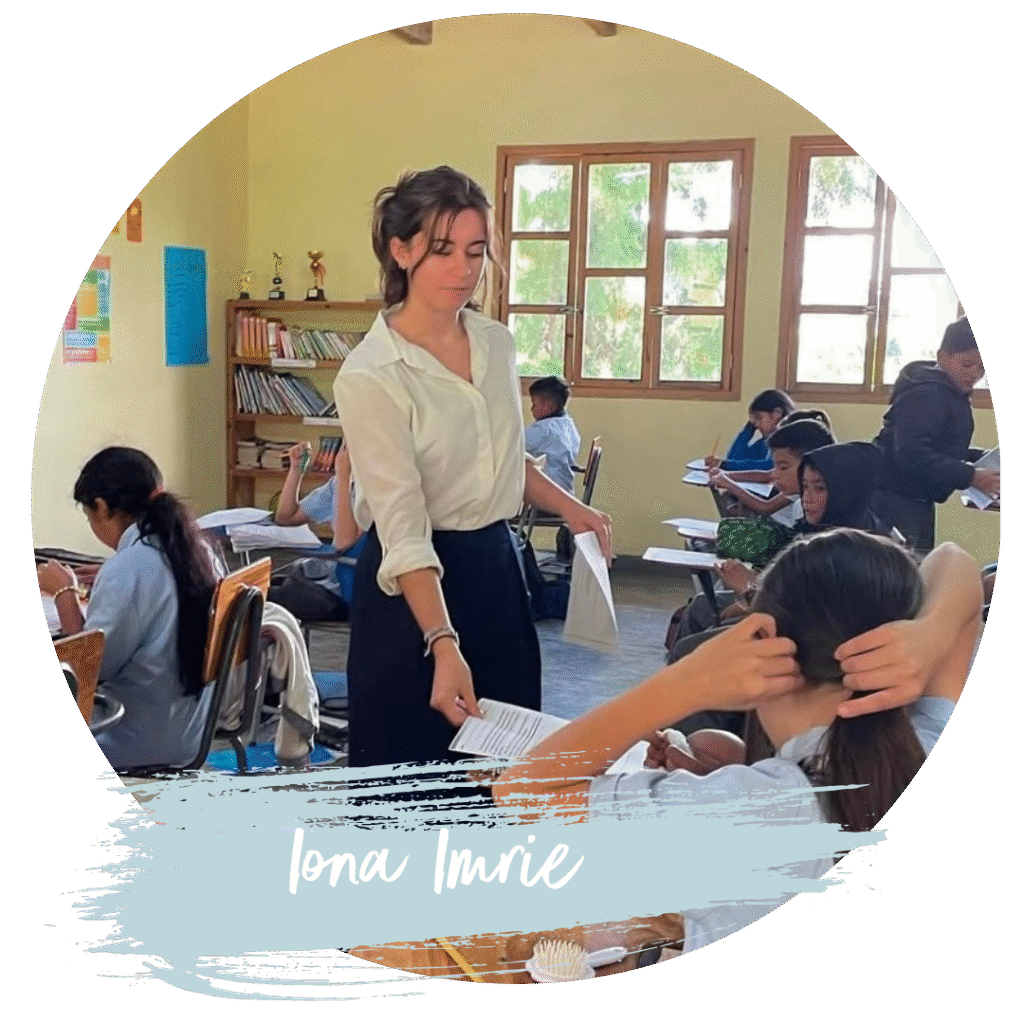
    International Volunteer Day is a special celebration for us at Project Trust as it’s at the very heart of everything we do. This year, we’re proud to highlight Iona, one of our inspiring Volunteers in Honduras. Iona has immersed herself in a new culture and been thoroughly impacted by her new community. We asked her to share what volunteering with Project Trust means to her.

    “Volunteering with Project Trust is an incredible opportunity that allows young people from across the UK to make a meaningful impact in communities around the world. To volunteer with Project Trust means immersing yourself fully in a new cultural experience that fosters global awareness, personal resilience, and independence.

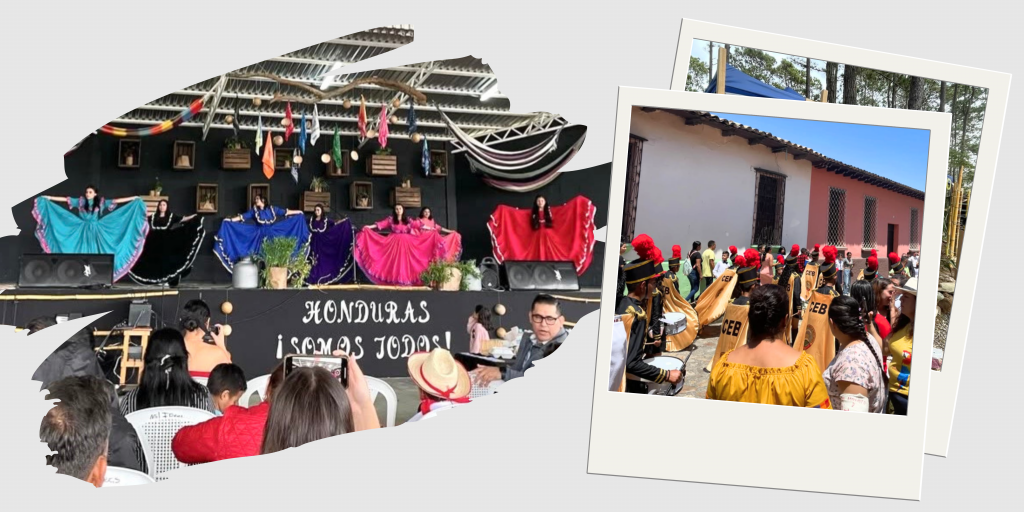
    One of the most amazing aspects of my placement so far has been experiencing the diverse cultures. I am based in Yamaranguila, Honduras, working with a bilingual school organisation called Abundant Life Christian Schools. This experience has encouraged me to participate in local cultural celebrations, such as Fiesta Típica, Semana Morazánica, and National Teachers’ Day.

    In these new environments, we have the chance to learn about a different way of life, helping us expand beyond our own cultural perspectives and develop a more inclusive worldview. As Volunteers, we form deep, lasting bonds with our communities. My experience is not only benefitting my local community through my work but is also a significant benefit to me as a Volunteer. I am gaining valuable life lessons in humility, empathy, and adaptability.

    This experience with Project Trust is providing an invaluable opportunity for self-discovery. In just four months, I have faced challenges that have pushed me out of my comfort zone, such as overcoming language barriers and adjusting to a completely new culture. This experience is about forming new friendships with people from all over the world, whether they are fellow Honduras Volunteers, colleagues at the school, or Honduran locals. It’s about building connections with your community that will last for years to come.

    Volunteering with Project Trust is one of the most important things I have ever done and probably ever will do. I know that this year away from home will change me profoundly, whether by shifting my worldviews, altering my opinions, or shaping who I am as a person. Through my teaching, I hope to make a positive impact on the community around me and leave a lasting mark. “

    Written by Iona Catherine Imrie, Honduras Volunteer.

    Iona’s experience captures the heart of volunteering, embracing challenges, building connections, and making a lasting impact. We look forward to seeing how she continues to grow and inspire others.

    If you’d like to learn more about volunteering in Honduras take a look here.