What has been your biggest learning over the past 12 months?
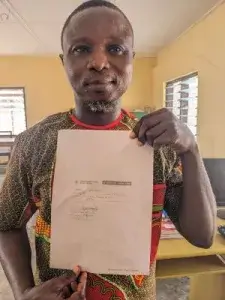
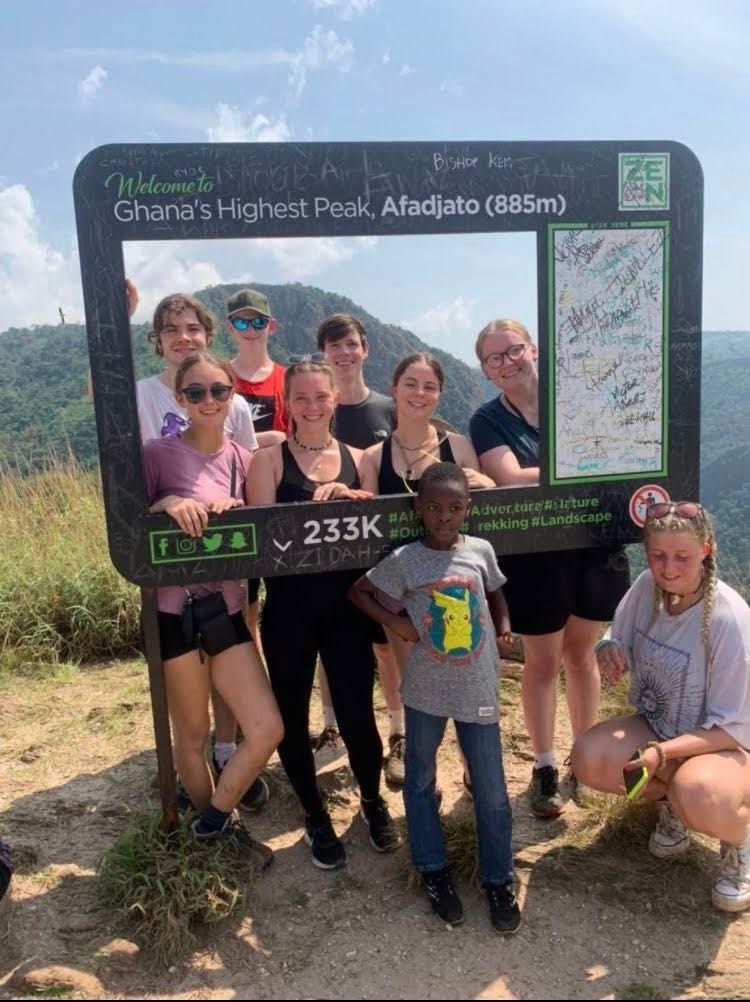
My biggest learning was to not rely on anyone else or bigger longer-term goals for my happiness and to instead take things more slowly, making the most of living day to day and celebrating the smaller successes. While trying not to worry about the problems in the future to which I currently had no available solution. The Ghanaian idea of ‘small-small’ means you are getting a tiny bit better each time, and I think this idea is very helpful, and important to not focus on negatives or things that are uncertain about the future.
Who inspired you the most during your placement?
Sir Issac was my biggest inspiration. Despite being the second oldest teacher (probably around 39), he advocated vehemently the reforming and modernisation of the curriculum and the traditional school activities. He was the main coordinator and quizmaster for the exciting initiative of an intellectual quiz competition, which encouraged younger and gifted children to learn and be rewarded (for which I was the assistant quizmaster). All the children he teaches greatly respect him, alongside his colleagues.
What was the best thing at Debriefing?
I found debriefing important and cathartic for helping me process what had happened. The most important if not purely enjoyable activity was carefully listening to a mixed group of Volunteers talking about their perceived impact and the way their experiences had impacted them. Then I took my turn to stand up in front of everyone and reflect on my experience.
It was cathartic and positive as it felt as if all of us could relate to and at least partially understand each other’s challenges- hence it made me feel better and a lot less isolated in what you went through. Also, the range of feedback given throughout debriefing, covering the entire gap year journey from selection and recruitment to returning, was vital for Project Trust. It also shows how much the current Volunteers genuinely care about the experience that future Volunteers get and who hopefully will be taking this same journey.
This January Project Trust were excited to send Volunteers back to Cambodia for the first time since the pandemic.
Below Anna and Skye tell us what their first 5 months living and volunteering in Phnom Penh, Cambodia have been like.
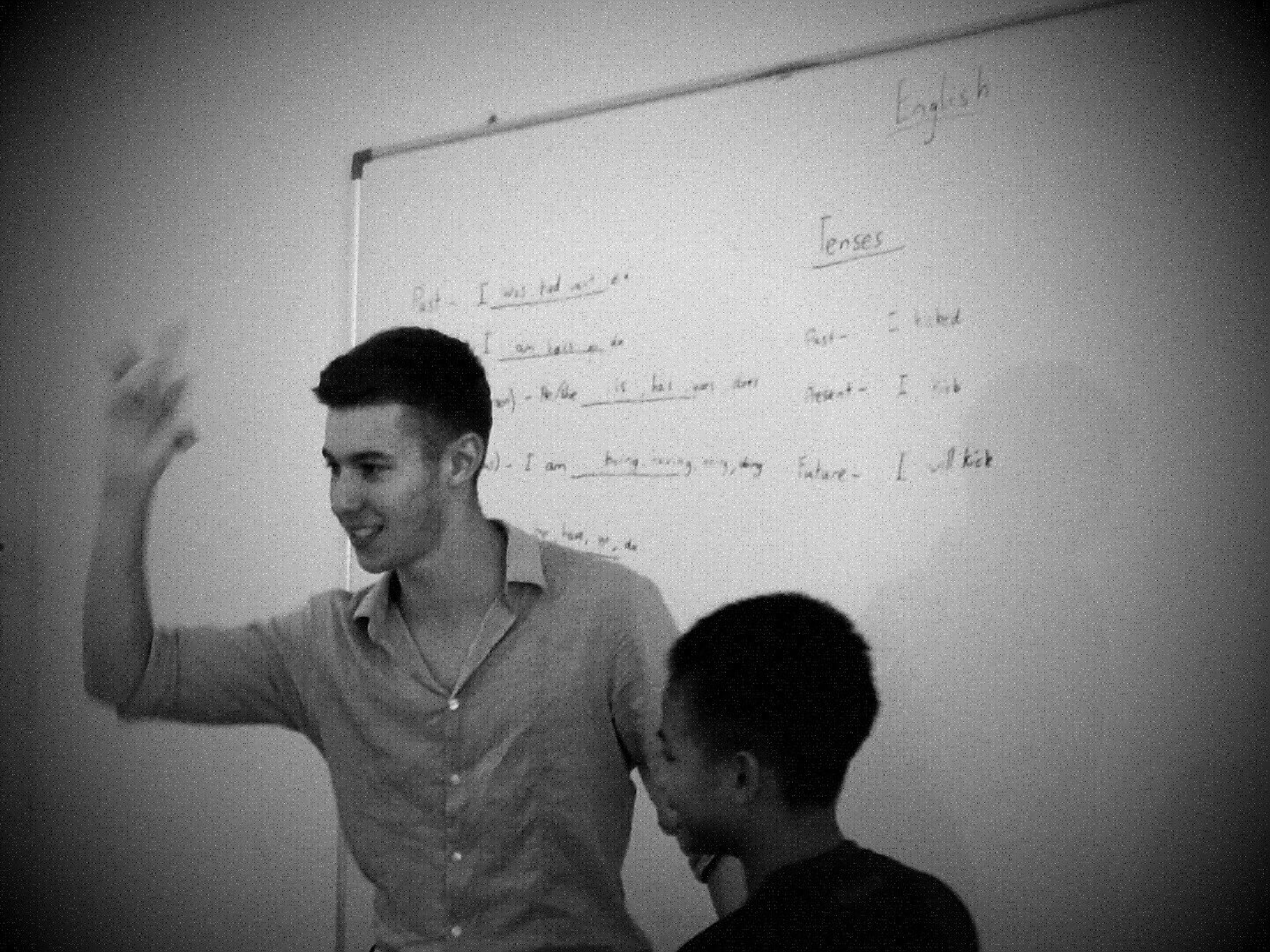
Skye and I embarked on our Project Trust journey in January, volunteering at Don Bosco Technical School Phnom Penh where we teach English, assist with extra-curricular activities, and help look after the boarder girls. We have currently passed the halfway mark and it’s difficult to put into words how fantastic our experience has been thus far despite a few difficulties in the beginning. It’s been wonderful to talk to the students and watch as they gain more confidence while speaking English and interacting with us.
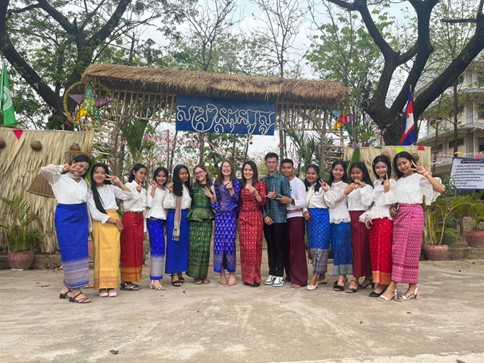
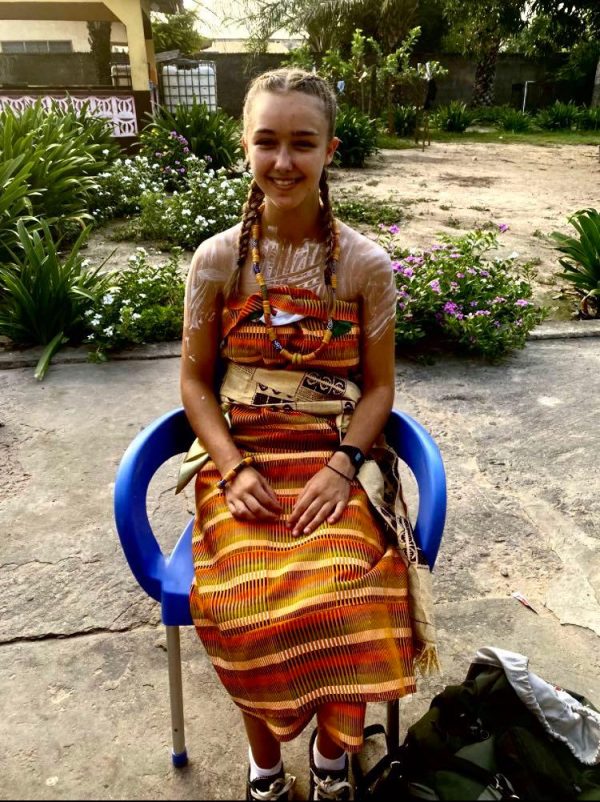
There have been many memorable times so far spent with the students and staff. The Khmer New Year celebrations have been a highlight. During the month-long celebration, we played numerous traditional games including lots of running, and danced every day. We’re quickly becoming fans of Khmer music. We were able to engage with and have fun with both students and staff. There was nonstop joy and laughter. We all wore traditional Khmer dress for the day which contributed to our discovery of the various traditions and cultural aspects of this celebration. One of our favourite moments was when we danced and sprayed water at each other with hoses, as playing with water is an important part of New Year celebrations here. These moments will live with us forever.
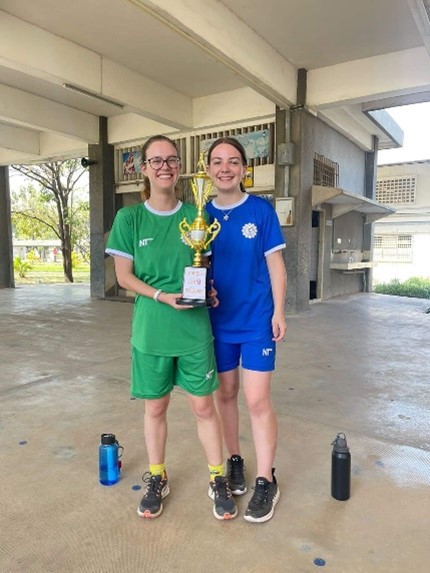
The Don Bosco Feast Day which was held in January was yet another extremely memorable occasion. This was a four-day celebration where we remembered the founder of the Salesian community, watched the students play football matches and other games, and ate traditional Khmer food. It was an exciting atmosphere as the students claimed the football championship. The following day we had mass and got assigned our team colours – green and blue respectively and joined the students in a quiz about the life of Don Bosco. Over the course of the 4 days, the colour teams competed in various events culminating in the distribution of trophies. It was lovely to learn more about the Salesian community and the important values Don Bosco represents.
One piece of advice we can share is that the best days are the ones you don’t expect. We can’t wait to see what the next few months looks like and hope to continue sharing these special moments with our students.
Hi, I’m Abbie and I am currently living with Eliza, my project partner, in Anyako Kpota, Ghana.
Even though my time volunteering is slowly coming to an end, I want to share the amazing experiences I have had over the past 7 months.
Anyako Kpota is a very small town which is located in the Volta Region of Ghana. Anyako (the main town) is located on the island which is in the Keta Lagoon. We are based only a 15 minute walk away from Anyako and a few minutes walk away from the lagoon (we get a lovely breeze so are not suffering too badly from the heat!). Our school is only a 2 minute walk from the house and compared to other schools, it looks very big. We have the Basic School (which contains Kindergarten, Primary and JHS – Junior High School) and then we also have the Senior High School (equivalent to Sixth Form or College). I teach JHS 1 which contains 24 students with ages ranging from 12 to 20. I also teach JHS 2 which contains over 50 students and are between the ages of 13 and 22!
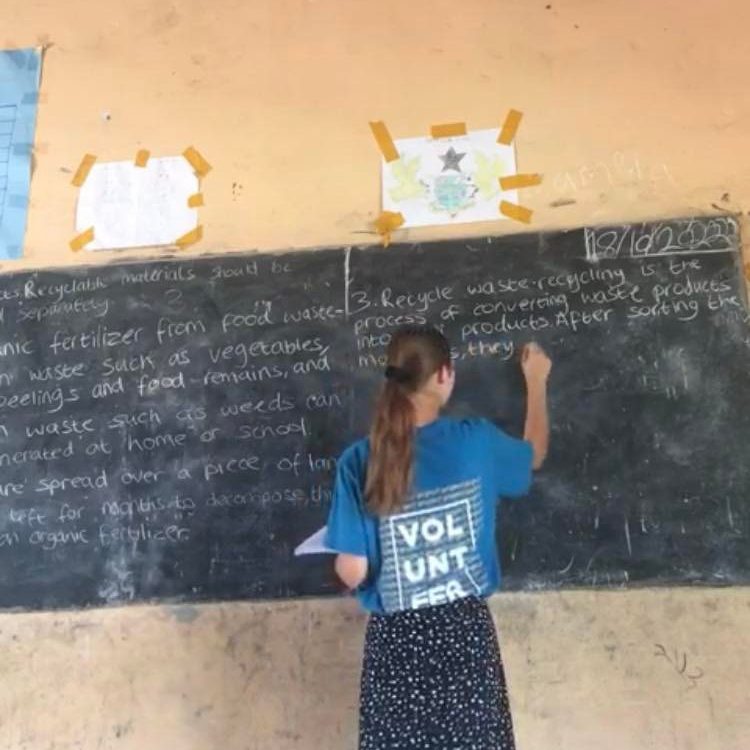
The subject I teach is Career Technology and it is certainly a challenging subject to teach. Career technology is a mix of life skills, science, home economics and business (it certainly covers a wide variety of different topics).
Despite being very busy with teaching and writing exams, I have had a chance to explore many different regions in Ghana. Some of the places I have been lucky enough to experience is Accra (the Capital city), Ho (the capital of the Volta Region), Tamale, Kumasi, Mole and also all the way across the coast to Busua. Even though every different area of Ghana has its own attributes, I have noticed that Ghana as a whole is such a warm-hearted country. Everywhere I have been to, everyone has been so welcoming and helpful even when we do not know them! This is something I am definitely going to miss.
The last 7 months have definitely been an emotional rollercoaster but I have had the best experience of my life! The initial month in Ghana was such a culture shock but I was too excited about starting to teach and explore a different country. Personally, I found Christmas time the hardest as I had been in Ghana for a fair amount of time and was starting to miss home. However, home was only a phone call away and I was able to talk to the other volunteers if I needed to. This start of this year has flown by and it will not be long till I have finished my journey in Ghana.
Between all the teaching and travelling, I have also been able to help with netball at the school. We have a full sized netball/basketball course that is well used! I have been sharing my journey on both Instagram and Facebook so people who have supported me throughout my Project Trust journey and also people who are thinking of volunteering, can gain a deeper insight on my experience. Recently, I started up a blog where I am going to share more about my day-to-day life; it is going to take a lot of work as I have only a few posts but it is a start!
We are a youth-focused organisation and a key part of our vision is the recognition of, respect for and promotion of children’s human rights. Follow the link for more information on children’s rights, rights frameworks and rights-based legislation.
Lily Barnett and Nell Andrews, who are currently halfway through their year in Joal, Senegal, talk to us about their daily life, their involvement with the local environmental organisation AGIRE, and how their Project Trust experience has had them thinking about the injustices surrounding Climate Change.
1. Could you tell us a bit about your experience so far? help us to imagine your day to day?
Day to day doesn’t really exist for our project. Out here in Joal, Senegal, we are always meeting new people every day and with that comes spontaneous new projects.
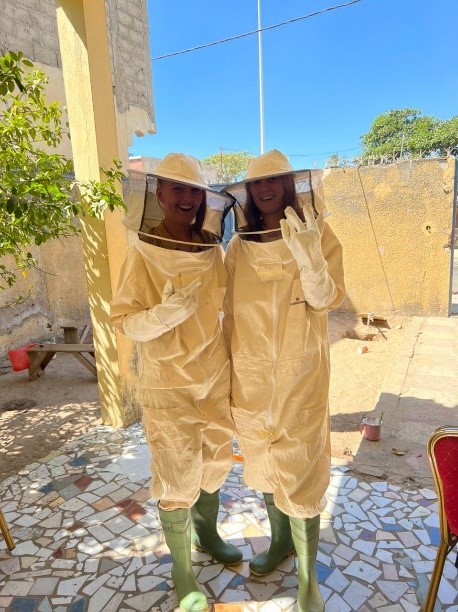
For example, teaching girls how to swim, painting someone’s restaurant, and joining a local environment organization. We found this to be one of the most rewarding, and yet most tiring, part of our project trust experience so far.
2. How did the environmental project come about?
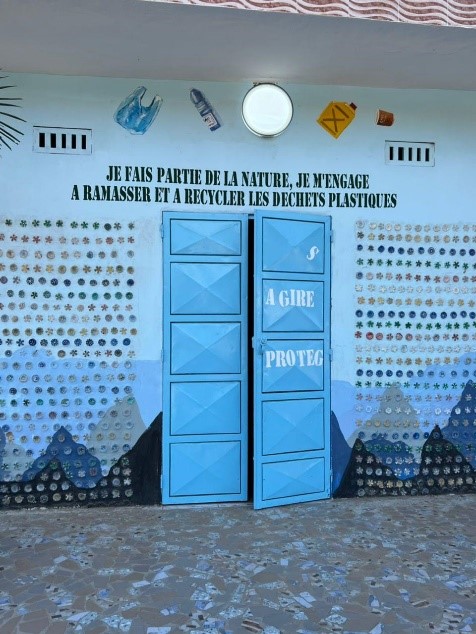
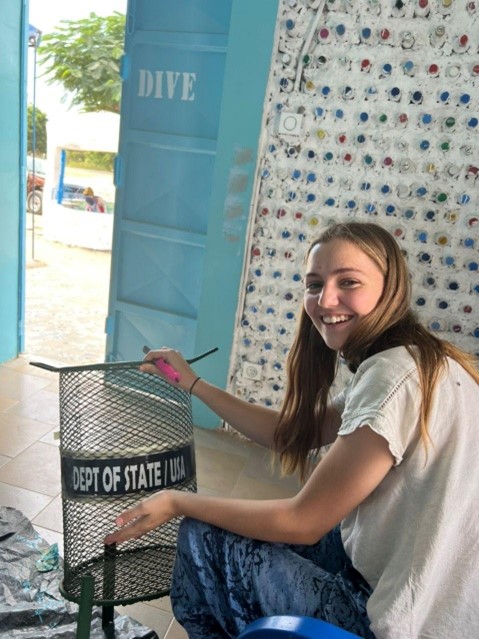
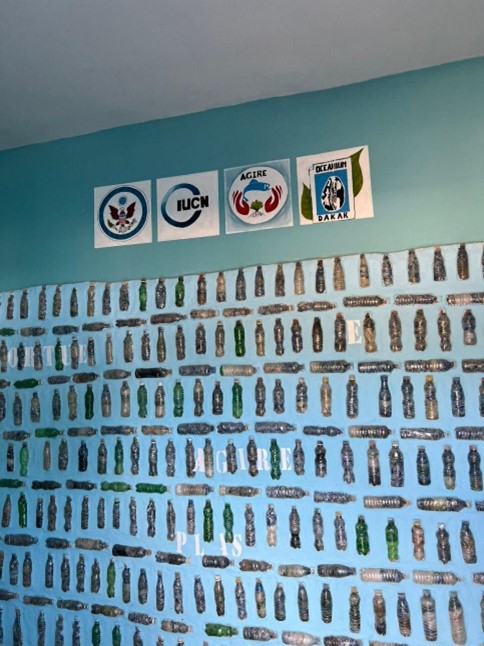
One day, walking back from school we found a nicely decorated building. It had a beautiful mural on the outside and we could see plastic bottles built into its walls. Interested, we just sort of walked in to find a man, who we now know as Samba, spray painting a load of bins. We asked if we could help and spent the next couple of hours constructing and decorating these bins. This was the first project we got involved in with AGIRE, Joal’s local environmental organisation. They were making bins so that people had a place to throw their rubbish as opposed to just on the streets. We asked if we could volunteer there and now we find ourselves teaching the AGIRE team English once a week.
3. On the theme of Earth Day, how has your time living and working in Senegal impacted your views on Climate Change and the need to protect the Environment?
I think living and working in a country like Senegal has made us more greatly appreciate the complexity of the green transition for developing economies. Living in a developing country on a local wage, you get a greater appreciation for the luxury that it is to have the means to make green decisions. Here plastic is an inevitability, all vehicles run on petrol and most of our energy comes from fossil fuels.
Yet, simultaneously we find ourselves living much lower carbon lives. We live without running water, eat seasonal foods and use very limited electricity. This simultaneously hits home the injustice of climate change. Senegal produces a fraction of the emissions that the UK does yet faces huge consequences such as major sea level rise expected to be greater in West Africa than on average and a decrease in rainfall leading to drought and food insecurity. It’s realising that it’s ordinary people in our community who will have to deal with a lot of these problems that really hits home.
Maisie and Sarah are two volunteers currently living in La Union, Honduras.
Here is a little blog they wrote about some of their Christmas travels.
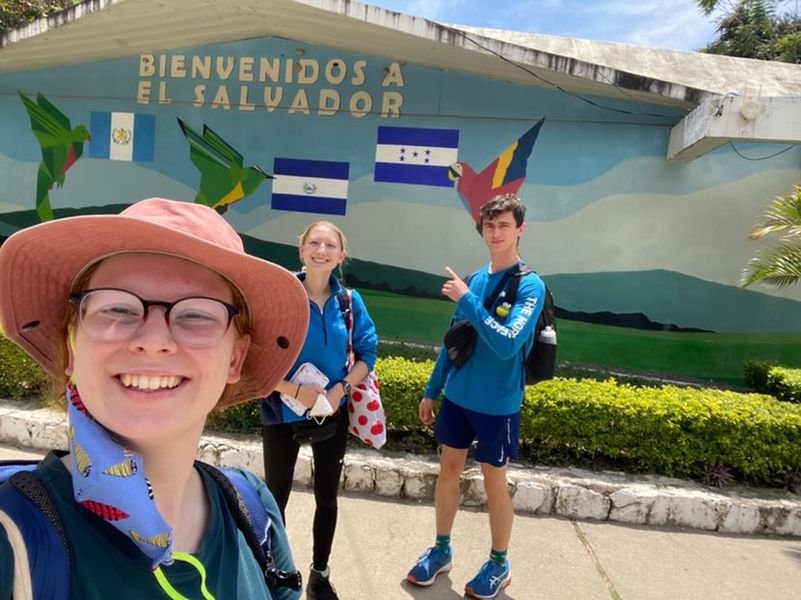
I’ll be talking about two holidays, filled with many similarities and differences, both very special to us. They have truly showed us just how varied and rich Central America is, and how lucky we are to be able to explore it. Now let me take you back to October, where we discovered the underrated and raw beauty of El Salvador for ourselves…
(5/10/22) Backpacks bursting at the seams, we headed to Gracias, the nearest town to our little mountain Project in La Unión and here we picked up our friend and fellow volunteer, Sam. Retired US school buses are the main method of public transportation here. Despite being old enough to be someone’s grandpa, they’ve proven sturdier than UK buses, crossing rivers and mountains (albeit with a sharp intake of breath from all those aboard when the river looks a little wild…) Personal space and comfort are limited, but for only £15 to travel 283km it’s an easy trade off. 12 hours of travel later we’d arrived at Santa Ana, the second biggest city in El Salvador, situated in the North-West of the country.
We almost regretted our chosen destination the first day of travel, as our 12th hour onboard old US school busses dawned, and we knew most of our fellow Honduras volunteers had rented a comfy bus and were probably nearing the beach and a glass of something bright pink, cold, and sparkly. When we arrived in Santa Ana, which looked a little run down at night, our hopes were not heightened. However! It all took a turn for the better when we found our hostel. Our hostel owner (Luis) was absolutely delightful. He gave us a run down of the best things Santa Ana had to offer, from restaurants to nearby attractions. He even pinned locations on Google Maps for us so we’d know when to get off the bus – a big help, as bus stops can be rare in Central America. We truly felt part of his family, what with the home cooked breakfast, coffee or hot chocolate, and crate of rambutans, all for under £40 per person for the three nights.
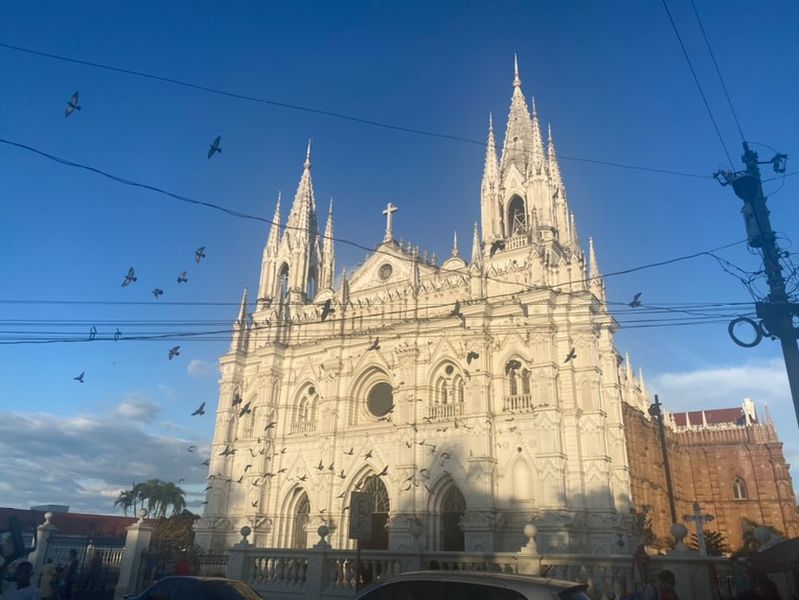
The next day (6/10/22) we sought out the pride and joy of Santa Ana – their cathedral! We’d caught a glimpse of it the night before in the dark, but in daylight the spooky Addams family feel had lifted, and it was truly a sight to behold; not only for its grandeur but its uniqueness – apparently it is Latin America’s only gothic building!
That day we also visited two Mayan ruin sites with wonderful museums attached (we’ve missed museums lots) and tried yucca con chicharrón, an El Salvadorian specialty. The yucca (a potato-like vegetable) is boiled, mashed, and topped with cabbage, pork (chicharrón) and a spicy tomato sauce. I ordered mine ‘sin carne’ and got the usual blank stare – vegetarianism is not common here, although the people have been interested to know more when they find out I have survived without meat for about 5 years. I’ve found vegetarian options (even if they aren’t intentionally vegetarian) have been reasonably accessible everywhere we’ve travelled.
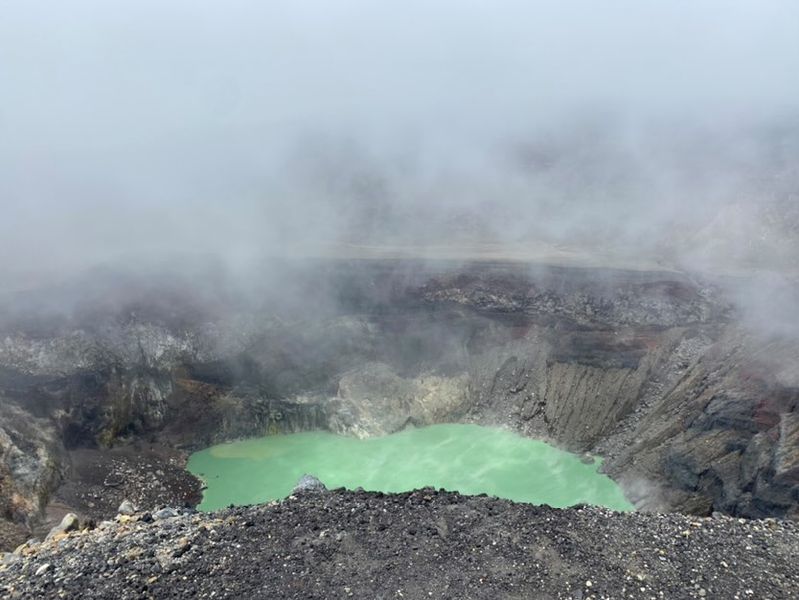
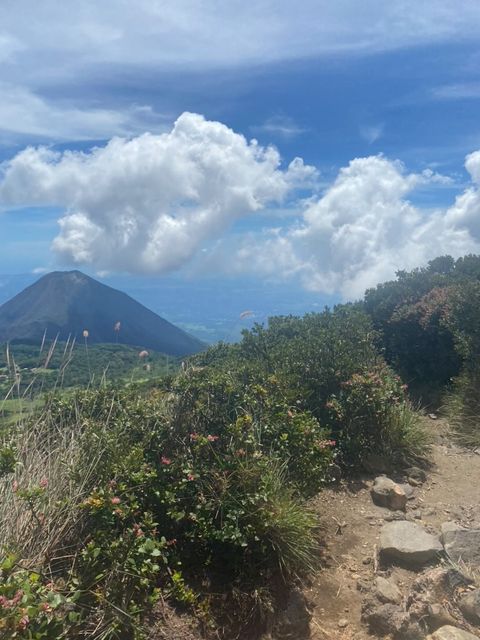
After a great nights sleep we set out the next day (7/10/22) to climb Volcan Santa Ana! I was dreading the climb a little and had packed my inhaler for the first time in a while. Luckily the hike was pleasant and only took a few hours. We were buffeted by the winds at the top, a relief for our sweaty faces but not so much for Sarah’s anxiety – she was worried I’d be blown into the sulfur lake at the bottom of the crater…
We met some lovely people from all corners of the world and were so immersed in conversation that we missed the early bus back to Santa Ana. One of them was also Dutch and volunteering in Honduras, just one example of how many unexpected, yet welcome, surprises you encounter during your travels.
(8/10/22) Time to return home! Following advice from Luis, we travelled back through Guatemala and shaved about 2 hours off the trip at a marginally higher cost. We were happy to arrive back in Gracias, and even more relieved when we finally made it to La Unión the next day and collapsed straight into our hammock.
For our third holiday (Christmas and New Year) we decided to visit my grandparents, who live in Belize. Belize is above Honduras, so this is the first time we would be traveling up North. Our journey was full of ups and downs – the first leg went as smoothly as Honduran roads permit, and we arrived safely in the beach town of Omoa. After a day and two nights in the beach town Omoa, one of which I spent on the bathroom floor with a horrible stomach bug, we were on our way to Puerto Cortez again, where the ferry terminal is. This is where the fun began! (After the 100th wave of my queasiness passed…)
The sight of my grandparents waving at us from the Hokey Pokey dock in Placencia was a big relief, and we felt like our Christmas holidays had truly begun. In contrast to our lifestyle in Honduras, the next few weeks were spent in the luxury of air-conditioning and a fridge filled with smoked salmon (for Sarah), tofu, and Ben and Jerry’s. While we don’t miss much when we’re actually in our project, it’s still nice to experience a little UK ‘normalcy’ once in a while.
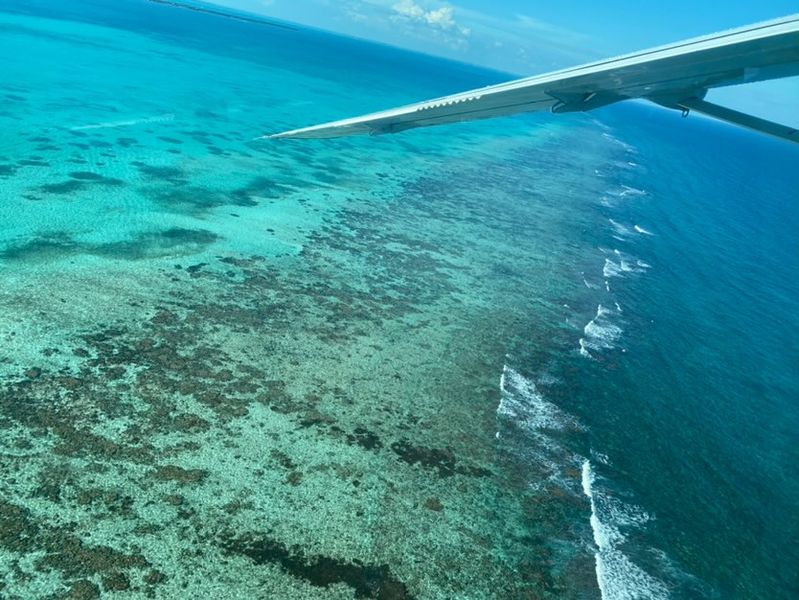
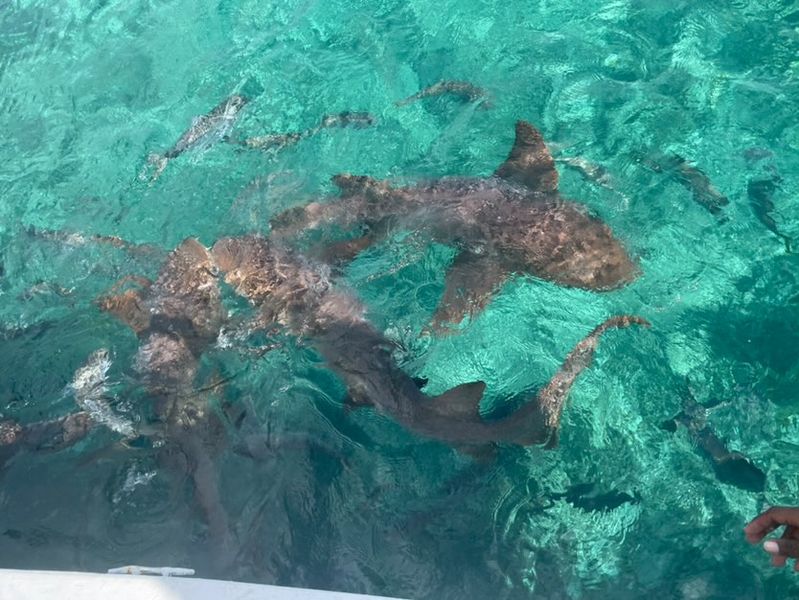
During week one we flew to Caye Caulker and spent a whirlwind few days snorkelling with sharks, turtles and sting rays, and sunbathing. Before we knew it, Christmas was upon us. Not quite the UK festive weather we are used to given the humidity and heat, but we made it our own and even baked some mince pies from scratch.
Week two was spent reading, recharging and just enjoying time around my grandparents and their friends. Week three brought another adventure, in the form of Lake Bacalar in Mexico. We enjoyed a picnic that included vegan cheese (something I had mentally given up for my year in Honduras) and Sarah and I spent about two hours in the lake, chatting and trying to walk from one side of a rope strung just over the water to the other.
Our time in Belize was jam-packed with various adventures, and while it was hard to wave goodbye on the ferry home, we do consider La Unión our home in the fullest sense of the word. Once more, the hammock eased our aching shoulders and we looked ahead to the start of the school year and the adventures that 2023 will bring.
I feel so incredibly privileged to have been able to travel to both El Salvador and Belize, and have learned and seen so much through both experiences. Most of all, however, I’m so grateful to be able to walk into school everyday to help my children learn new things, and to learn new things from them. I’m so grateful to be spending this year with my amazing project partner (Sarah) by my side, and even through power cuts, various minor illnesses, and culture/ language barriers we always find a way to laugh about something at the end of it all. Every day is such an adventure, and sometimes I wish I could just stay tucked away in rural Honduras forever.
I am volunteering at the Yamikani Foundation, a project based in Limbe, Blantyre. Here at Yamikani, we have 20 children living full time, with ages ranging from 6-18 years.
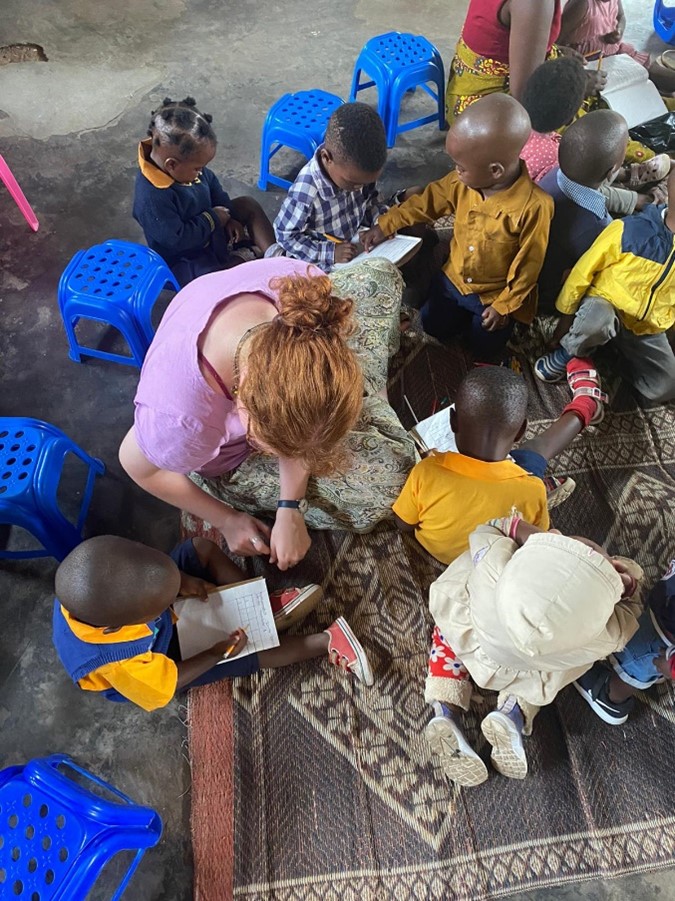
Our role in the house consists of helping with homework, running tutoring sessions twice a week to help the kids with subjects they find difficult at school, and organising ‘Sunday Funday’. More generally, me and my project partner, Molly, are here as older sister roles. We focus on the social development of the children, as well as improving their English and being available for emotional support.
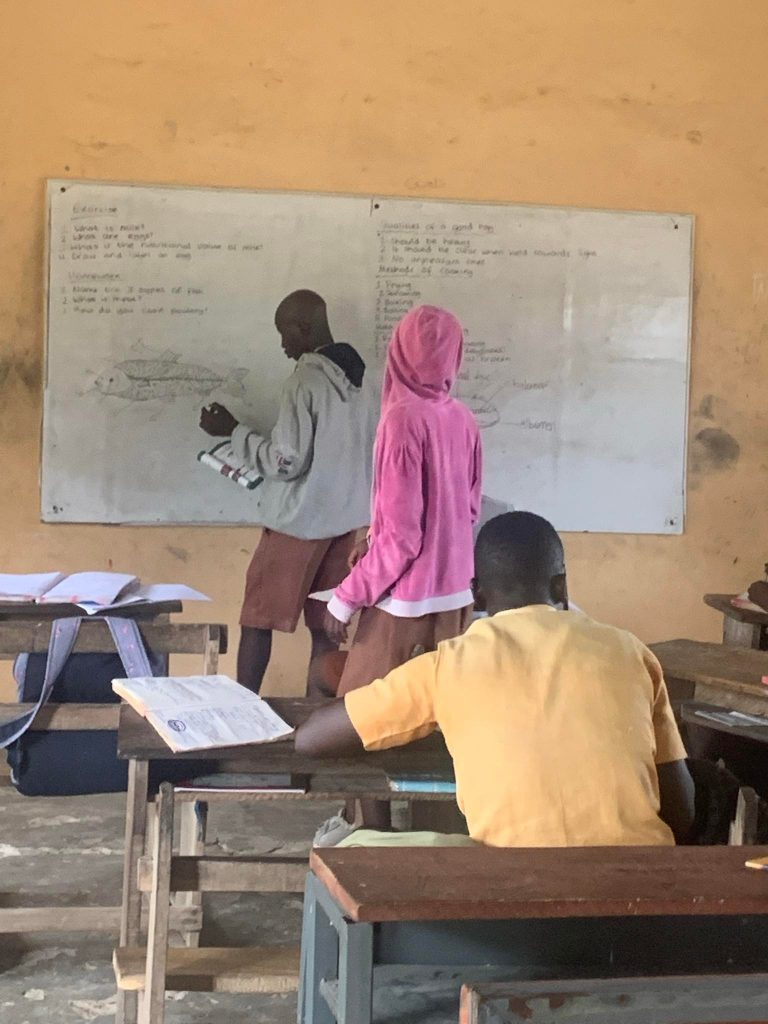
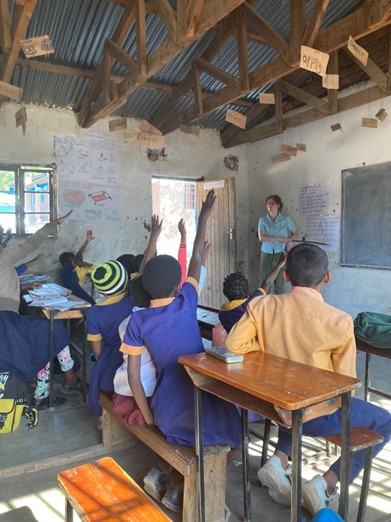
In addition to our responsibilities at Yamikani, we teach at a local primary school in the mornings. There, I lead English and Maths lessons for Standards 1 and 4, as well as teaching the odd session on Agriculture, Expressive Arts, or Life Skills. I also spend a few mornings in the nursery class (which has since been merged with the Reception class to create a very large, and very lively, bunch of learners).
I initially planned to complete my Project Trust placement back in 2020, but it was unfortunately cancelled due to the COVID-19 pandemic. Instead, I undefferred my place at university and have now taken a year out between my second and third year of studies.
My original motivation for choosing Project Trust as a gap year was the fact I was able to live within one community for the whole year. I wanted to fully immerse myself in the culture and be able to establish long term connections with the people and place. This motivation stayed true in my decision to make Project Trust my placement year. In addition to this, knowing that Project Trust sustainably and ethically source their placements, in which they only send volunteers for 8 or 12 months, was a huge factor in my decision.
The volunteering aspect of Project Trust was another factor for why I chose it over other placement year options. For me, volunteering is something everyone should do. Understanding the importance of giving time and energy into a role, where there is no monetary profit, makes you value all the other experiences you gain. The soft skills and personal growth that I have developed so far in my placement, are far more valuable and worthwhile than any kind of pay check.
I am just about to hit the 3 month mark of my time here in Malawi, and being only a quarter of the way through, I have already learnt so much. So far i have gained and developed skills in communication, problem solving, adaptability and resourcefulness, to name but a few. Making a big effort to learn the Chichewa language, which has gone pretty well, and the positive response I get from people in the community motivates me to learn even more. By the end of the year, my goal is to be able to hold a long conversation with the Aunties here at Yamikani (one that does not center around asking for charcoal or turning the garden tap on).
After my year in Malawi, I am heading back to Manchester to complete my 3rd and final year of my degree where I study International Disaster Management and Humanitarian Response. After graduation, I have extremely broad plans to pursue a career in either disaster risk reduction, or conflict analysis and peace building. I know for certain, however, that my career and life will be based within the continent of Africa, with this time in Malawi only cementing this idea further.
My placement here has given me the opportunity to create a number of contacts in the Malawian humanitarian aid sector, ones I hope to utilise in both the remainder of my time here, and my future career. It has also allowed me to develop my understanding of local issues, providing inspiration for both my dissertation topic when I return to university, and for my future work. One such issue is the scale of the informal sector here in Malawi, and unemployment rates. Throughout my time here, I want to learn more about these issues, and how the informal sector can be better protected in times of crises and disaster.
As I mentioned before, I chose a Project Trust placement because of the opportunity it gives to immerse yourself in the community for a whole year. This is something I have strived to do and will continue to develop throughout my time here. The friends I have made through being out in town, frequenting the market and local shops, and through our teaching roles at school, have truly proved the saying that Malawi is the ‘Warm Heart of Africa’. Everyone I have met is so friendly, constantly telling me, ‘takulandilani (you are welcome in Chichewa) and that I should ‘be free’ here in Malawi.
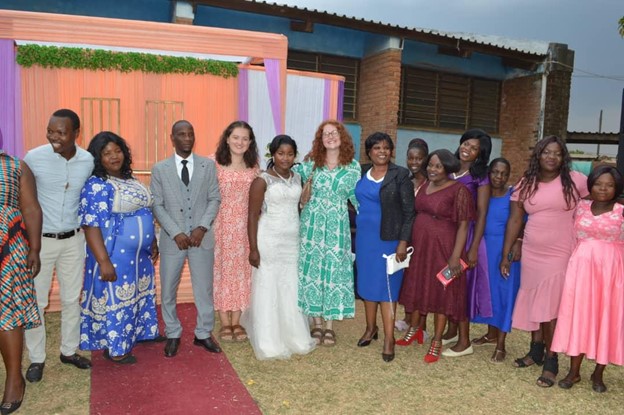
The biggest show of community that I have experienced so far was when we were invited to the wedding of one of the nursery teachers at school. In Malawian weddings, there is of course lots of music and dancing, as well as an MC who calls forward different groups of people to throw money at the bride and groom. Me and Molly were part of the group of teachers from our school, and were welcomed with such enthusiasm from everyone there.
I think one of the most important ways to integrate yourself into the community is to understand the hardships and struggles in which people go through. Here in Malawi, access to clean running water is not universal, and with no running water at our project, we have but a small taste of some of these issues.
I would say appreciation of water has been my biggest learning curve so far on my placement. Understanding the chore of drawing water from the well, while at the same time knowing it is also a big privilege to have such a water source, has changed my approach to water usage. My water habits and the appreciation I have for a running tap is something that will carry on past my time here in Malawi.
For anyone determined to become a driver for social change, but doesn’t know where to start, I’d say what stands out most to me is the effort and importance of understanding issues on a community level. Educating yourself by speaking to people involved and learning from their experiences and those of your own, is so important. It is also important to understand your own privilege, recognising how this may skew your approach and how to use it as a tool for positive change.
Finally, I would advocate self-reflection. Considering your past actions, and understanding how they can be better suited for social change is a key way to enacting such change. Here on my Project Trust placement, I am constantly reflecting on how I can better utilise my time here to ensure I have a positive impact on both the people and place.
Here we have some words from Ellie, a Thailand 2022/23 volunteer, currently living in Senangkhanikhom. Ellie talks us through what the first month of her Thailand experience at her project has been like.
Hi, I’m Ellie and I am currently living in Senangkhanikhom, Thailand, with Hattie, my project partner. Within three short weeks, I’ve already experienced more than I’d ever imagined, and I can’t express how excited I am for the year ahead. This will be my attempt at a summary to provide an idea of what living internationally as a volunteer is like; however, I could talk about it forever, so feel free to contact me.
In reflection of our time so far, the number of events we’ve witnessed and been involved in is inconceivable. After saying our goodbyes to the team in Bangkok, we embarked on the ten-hour bus journey to our village, where we were both immediately greeted by a group of the community in Senangkhanikhom, all ecstatic to meet us. We were taken straight to the village market for a 6 a.m. breakfast of sticky rice and noodles (chicken feet were optional), then to the school where we would work for the year. Upon arrival at Senangkhanikhom Kindergarten, we were met by critical committee members and given gifts of gorgeous flower garlands and Thai silk scarves from the mayor and school principal.
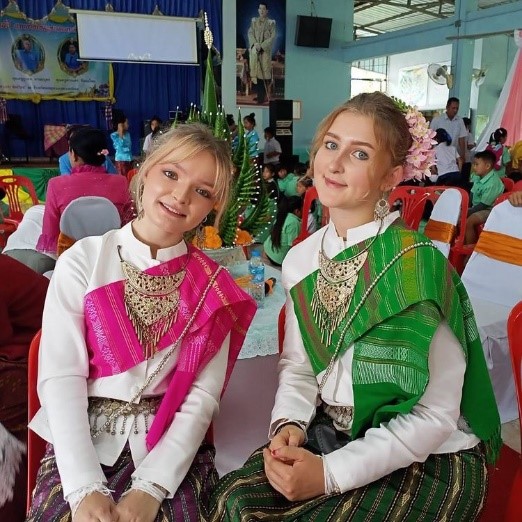
The scarves the mayor gave us resembled our Thai names; I am ‘Praewa’ and Hattie is ‘Pha Mai’, both are types of traditional Thai silks. We paraded around the school, saying hello to all the children and trying out the bikes the community bought for us. Afterwards, our host, Tam so kindly threw us a traditional Thai Barbecue party which included the divine menu of pig ear, pig intestine and raw beef (killed a few hours prior to eating).
It was all prepared beautifully by her family, using ingredients from her Mum’s garden that includes a wide herb selection, ranging from spring onions to more exotic choices. We sat around the table all evening with loads of people from the area, warmed by everyone’s hospitality whilst being massively humbled in terms of spice tolerance. This set the scene nicely for the next three weeks.
At first, living internationally was like being thrown into the deep end, it felt like being at square one with a severe language barrier and no connections apart from your partner. From a different perspective, being immersed in a foreign environment naturally encourages independence and has unknowingly induced a new approach to meeting people and communicating. It should be expected that there will be challenges- even if it’s sleeping in an ant infestation because the chocolate was left out (literal ants in the pants situation). It may seem relatively tame but, I can confirm, that I was left scarred by the ants.
Since being here, we’ve met some insanely lovely people, have explored all types of places, learnt SO much and have jumped at every opportunity presented to us- something I highly recommend. Hattie and I have found ourselves in some mental situations of which a mere exchanged glance can send us into hysterics.
We’ve found some of our favourite moments were spent navigating around our village and getting to know this new, foreign place. Also, the religion, music, art and food is so interesting and I really recommend spending time learning about it all because you appreciate everything in different perspectives.
“Of course, you’re my sister.” Muhammad’s words of encouragement came as a touching surprise. I’m not great with tech at the best of times, but in Senegal, without an Apple Store, I had no idea how to get my frozen phone repaired. It was day three or four of the screen not budging. Where to go? Google search? YouTube tutorial? It turned out the answer lay in the room across the hall. Within hours of asking, my phone was being dissected and repaired by local legend ‘DJ Portable’ after a free ride and recommendation by host brother Muhammad. (Can report – despite being wiped – it returned functioning perfectly.)
What does it take to build a trusting relationship with a family from a different culture? More than living with them for the best part of a year; but that alone goes a long way. Birthdays, bad days, western favourites and Muslim holidays spent together are the bare minimum of nine months’ shared experiences when you live with a typical Senegalese family. Mine – the Ndiayes – threw in personalities, ages, delicious home cooking and resident sheep: so each day became a chance to get to know each other better.
We – Fionn, my project partner and I – entered this house thankful but guilt-ridden, apologising for our presence from the start. The relationships blossomed when we accepted their kindness and tried to make it up to them in other ways. Weekly joys lay in discovering what they took for granted, them shedding light on our western customs, and a general sense of exchange and valuable company.
One week we had no running water for four days. We shared out what little we had stored, and resolved next time to fill up a few more jerry cans in case of emergency. One evening I was asked what food we ate in the UK. A month or so later, spaghetti bolognese became a regular family meal – prepared by a different handful of helpful family members each time, with fresh baguettes and extra spice served in Senegalese addition. We picked mangoes together, played copious rounds of Uno, and traded Attaya and Kanquiliba (Senegalese tea) for Earl Grey and English Breakfast. Other exchanges included help with homework and lesson plans, naïve questions asked and answered and a great many board games and dances.
Around July, school drawing to a close, Alouine, youngest of the six Ndiaye siblings at fourteen, was having a frustrating argument with some of the rest of the family. He began crying – something I’d never seen this jokey, confident boy let himself do before. Most of the argument was in shouty bursts of Wolof (the mother tongue), so I dared not join in or attempt peace making for fear of misunderstanding. Everyone was very angry: these were high stakes being discussed. It all got too much, and at one point I decided to walk away from the noise to a sofa, guiding Alouine with me. I sat beside him in silence and never found out what that argument was about. I know he’d be too proud to tell me. But I waited with him while the dust settled. Because he’s my brother.