Your basket is currently empty!
-
1 Month In: Ellie’s Thailand Experience

Here we have some words from Ellie, a Thailand 2022/23 volunteer, currently living in Senangkhanikhom. Ellie talks us through what the first month of her Thailand experience at her project has been like.
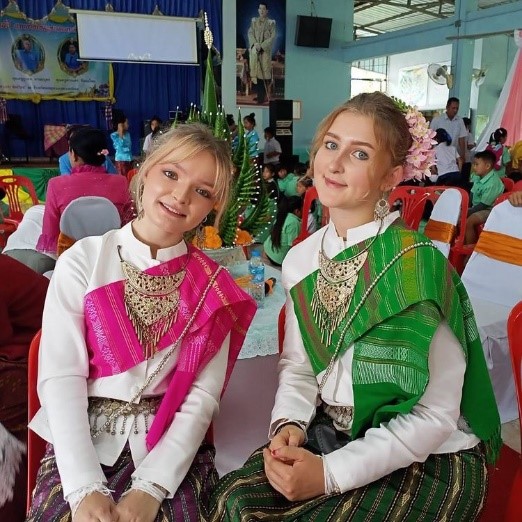
Hi, Iโm Ellie and I am currently living in Senangkhanikhom, Thailand, with Hattie, my project partner. Within three short weeks, Iโve already experienced more than Iโd ever imagined, and I canโt express how excited I am for the year ahead. This will be my attempt at a summary to provide an idea of what living internationally as a volunteer is like; however, I could talk about it forever, so feel free to contact me.
In reflection of our time so far, the number of events weโve witnessed and been involved in is inconceivable. After saying our goodbyes to the team in Bangkok, we embarked on the ten-hour bus journey to our village, where we were both immediately greeted by a group of the community in Senangkhanikhom, all ecstatic to meet us. We were taken straight to the village market for a 6 a.m. breakfast of sticky rice and noodles (chicken feet were optional), then to the school where we would work for the year. Upon arrival at Senangkhanikhom Kindergarten, we were met by critical committee members and given gifts of gorgeous flower garlands and Thai silk scarves from the mayor and school principal.
The scarves the mayor gave us resembled our Thai names; I am โPraewaโ and Hattie is โPha Maiโ, both are types of traditional Thai silks. We paraded around the school, saying hello to all the children and trying out the bikes the community bought for us. Afterwards, our host, Tam so kindly threw us a traditional Thai Barbecue party which included the divine menu of pig ear, pig intestine and raw beef (killed a few hours prior to eating).
It was all prepared beautifully by her family, using ingredients from her Mumโs garden that includes a wide herb selection, ranging from spring onions to more exotic choices. We sat around the table all evening with loads of people from the area, warmed by everyone’s hospitality whilst being massively humbled in terms of spice tolerance. This set the scene nicely for the next three weeks.
At first, living internationally was like being thrown into the deep end, it felt like being at square one with a severe language barrier and no connections apart from your partner. From a different perspective, being immersed in a foreign environment naturally encourages independence and has unknowingly induced a new approach to meeting people and communicating. It should be expected that there will be challenges- even if itโs sleeping in an ant infestation because the chocolate was left out (literal ants in the pants situation). It may seem relatively tame but, I can confirm, that I was left scarred by the ants.
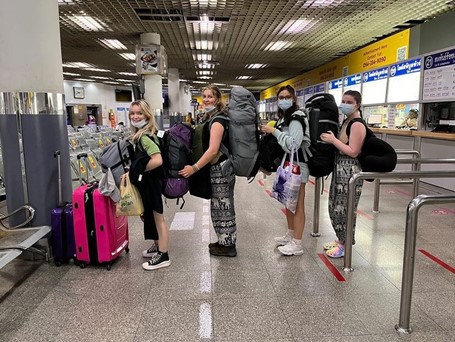
Since being here, weโve met some insanely lovely people, have explored all types of places, learnt SO much and have jumped at every opportunity presented to us- something I highly recommend. Hattie and I have found ourselves in some mental situations of which a mere exchanged glance can send us into hysterics.
Weโve found some of our favourite moments were spent navigating around our village and getting to know this new, foreign place. Also, the religion, music, art and food is so interesting and I really recommend spending time learning about it all because you appreciate everything in different perspectives.
-
Family Matters

โOf course, youโre my sister.โ Muhammadโs words of encouragement came as a touching surprise. Iโm not great with tech at the best of times, but in Senegal, without an Apple Store, I had no idea how to get my frozen phone repaired. It was day three or four of the screen not budging. Where to go? Google search? YouTube tutorial? It turned out the answer lay in the room across the hall. Within hours of asking, my phone was being dissected and repaired by local legend โDJ Portableโ after a free ride and recommendation by host brother Muhammad. (Can report – despite being wiped – it returned functioning perfectly.)
What does it take to build a trusting relationship with a family from a different culture? More than living with them for the best part of a year; but that alone goes a long way. Birthdays, bad days, western favourites and Muslim holidays spent together are the bare minimum of nine monthsโ shared experiences when you live with a typical Senegalese family. Mine – the Ndiayes – threw in personalities, ages, delicious home cooking and resident sheep: so each day became a chance to get to know each other better.
We – Fionn, my project partner and I – entered this house thankful but guilt-ridden, apologising for our presence from the start. The relationships blossomed when we accepted their kindness and tried to make it up to them in other ways. Weekly joys lay in discovering what they took for granted, them shedding light on our western customs, and a general sense of exchange and valuable company.
One week we had no running water for four days. We shared out what little we had stored, and resolved next time to fill up a few more jerry cans in case of emergency. One evening I was asked what food we ate in the UK. A month or so later, spaghetti bolognese became a regular family meal – prepared by a different handful of helpful family members each time, with fresh baguettes and extra spice served in Senegalese addition. We picked mangoes together, played copious rounds of Uno, and traded Attaya and Kanquiliba (Senegalese tea) for Earl Grey and English Breakfast. Other exchanges included help with homework and lesson plans, naรฏve questions asked and answered and a great many board games and dances.
Around July, school drawing to a close, Alouine, youngest of the six Ndiaye siblings at fourteen, was having a frustrating argument with some of the rest of the family. He began crying – something Iโd never seen this jokey, confident boy let himself do before. Most of the argument was in shouty bursts of Wolof (the mother tongue), so I dared not join in or attempt peace making for fear of misunderstanding. Everyone was very angry: these were high stakes being discussed. It all got too much, and at one point I decided to walk away from the noise to a sofa, guiding Alouine with me. I sat beside him in silence and never found out what that argument was about. I know heโd be too proud to tell me. But I waited with him while the dust settled. Because heโs my brother.
Brendan Proctor
-
Living in Thilmakha; adapting to rural life in Senegal


I went to Senegal with Project Trust in 2021. Iโd like to share my experiences living, working
and socialising in a remote village.
Travelling to your project for the first time is a unique experience, I remember driving
through an unfamiliar dusty landscape, with a few hardy trees and even hardier goats. I was
full of excitement, anticipation and nerves as this is going to be my home for the next
chapter in my life. Myself and my partner (Seona) were in Thilmakha, Senegal. A rural village
in the centre of the country, acclimatising was a bit tricky at first, with a whole new culture,
language, and an average of around 38 degrees Celsius. However, in no time it became our
home.
We were living in a room in a shared house, there were four separate houses with a
communal, and very lively, courtyard space in the centre. Our house was inhabited by men
working in the village, however in the other three houses were busy families who all took us
under their wing. We didnโt have a host family exactly, but we ate, cooked, babysat and
hung out with our neighbours daily. we had the option to either live at the school with other
teachers, or in our room in the heart of the village and we are very glad we chose the
village. This allowed us to be exposed to both worlds, school and village life.
Living with the community was incredibly enriching and meant we learned the local
language (Wolof) at speed. It is so rewarding to feel involved and accepted in the
community however it can be a balancing act, and in my experience, sometimes
overwhelming. The difference in culture is what makes the year so enriching and
interesting, however your expectations are constantly challenged. For example, our cultural
expectations of gender equality and animal rights. Over time we built up layers of
understanding which helped us process these things.
An example in our community, was a girl who lived next door. She was about 13 years old
and we assumed she was one of the familyโs daughters. However, we soon noticed she
wasnโt going to school, and realised she was a live-in maid. The scenario of a child working
as a maid and being denied education is awful, and should never happen. However
culturally it is the norm in parts of Senegal. In fact, they were surprised that we were
surprised. The girl had come from a poor background and not done well in school, so the
family saw taking her in for work as a charitable act. Of course, this is still a child being
denied of their rights but It is important to listen to perspectives when staying in a
community, even if you donโt agree.
Being immersed in a community is a wonderful thing. We were in a village which meant
everyone got to know us, and we had a close relationship with our neighbours, shop
keepers and students. One cultural difference which I found inspiring but also tricky was
how privacy is viewed. In Thilmakha every door is open, everyone shares meals, kids run
freely between houses and parenting is done by everyone. This in incredibly welcoming and
facilities a warm and friendly atmosphere. However, sometimes it can be hard to find time
for yourself. I definitely got a little frustrated when kids would bang on my door asking โwhy
did you lock it?!โ after a long day at school. I suppose the photos on our wall and fairly lights
were enticing. Kids would find where we lived and bring back flocks of others. You could say
we were novelties. However, this did all simmer down the longer we stayed. Itโs worth
noting we were the first volunteer teachers to go there with Project Trust, and the first
white people since the early nineties with the Peace Corps.
At first, I think we were making such an effort to get involved and learn the language, that
we ignored our โsocial batteriesโ. We found explaining that we wanted the occasional meal
to ourselves and the odd evening on our rooms beneficial for our energy levels and mental
health. I also think it was good or our โhost familiesโ to have some space. Nevertheless, we
have made friendships that will last a lifetime.
Onto My favourite topic, the food. We often helped cook, and paid a about ยฃ13 a month for
lunch and dinner from the neighbours whom we are close with. I can now say Iโve chopped
more onions than kids in the lycรฉe. I love cooking with people. Its one of those things that
fills people with pride, and encourages generosity and togetherness. Food is defiantly their
love language which was especially apparent at Tabaski (the Wolof name for Eid) which is a
Muslim festival, involving the killing and eating of sheep. We ate Thiebougenne pretty much
daily, which is a very popular dish in Senegal consisting of rice, fish and veggies.
Our neighbours Ngorne and Awa taught how to cook, hand wash clothes, and helped us get
good prices in the market. In turn we babysat, showed them songs, games and helped them
with school and house work. All in all, strong friendships were formed. One of the most
important ways they helped us was explaining things we didnโt understand, such as
Senegalese Islam, family dynamics and djinns (Islamic spirits who are believed to be very
much real).
Over time we definitely gained an understanding of wider Senegalese culture and Islam (the
main religion) which helped us make sense of our time there and appreciate it. We saw
some beautiful things, such as great Magals, which are religious festivals dedicated to
certain serignes (saints). But then again, also some more difficult things such as the Talibe
who are child beggars who work on the streets to learn lifeโs hardships and who learn the
Quran in the evening. I do think itโs important to realise that we canโt help everyone, and
are there to teach English and for a cultural exchange and not to change the world, and itโs
important to have mutual respect.
My nine months in Senegal hasnโt been the easiest period of my life, but I am so happy I
went, and will go back. The support we had from our community and friends made the
harder parts of our stay much easier. I know I will be reflecting and learning from the
experiences for many years to come. -
Jess’ Story

I am currently on a 10-month teaching placement in Senegal. As I am 22 years old, my Project Trust journey has been slightly different to the typical volunteer as I am one of the first to embark on the extended age range group. Doing a year overseas after university has suited me perfectly. A gap year was always something that appealed to me, however, in school I fell in love with my subject so I decided to go straight into university to study it. This was something I always reflected on and I couldnโt help but be envious when seeing the fantastic work that the Project Trust volunteers were doing on their placements. As I was approaching the end of my undergraduate degree, I was left with the often feared question of what was next for me. Although I was confident in my future career choice, the prospect of going straight into the workplace was something that didnโt sit quite right with me. I had a strong desire to see a new, vastly different part of the world and to experience another culture. As the working world is increasingly demanding, with employers looking for more experience now more than ever, I knew I wanted my gap year to be structured and well-established. When I saw that Project Trust had extended to university graduates, I thought this would be a perfect opportunity for me to meet all the criteria that I was seeking.

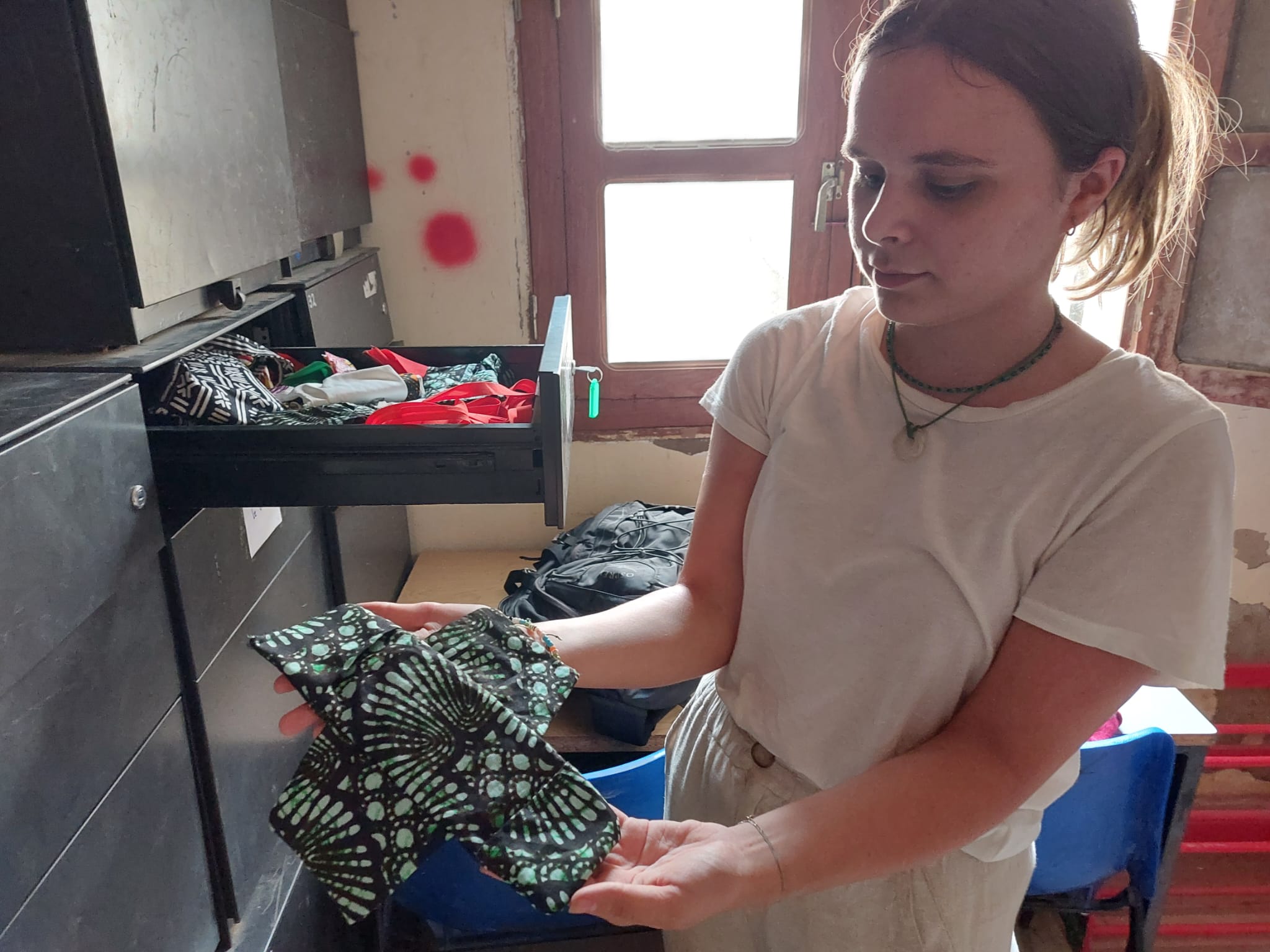
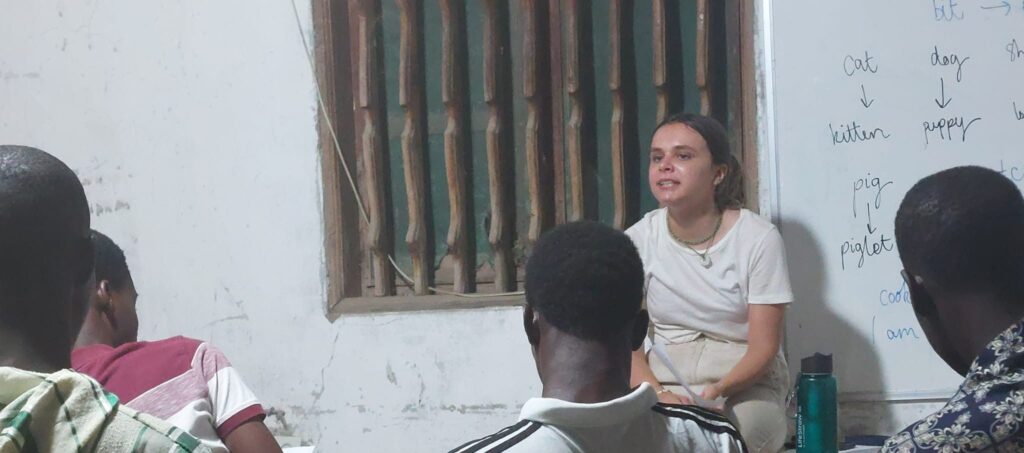
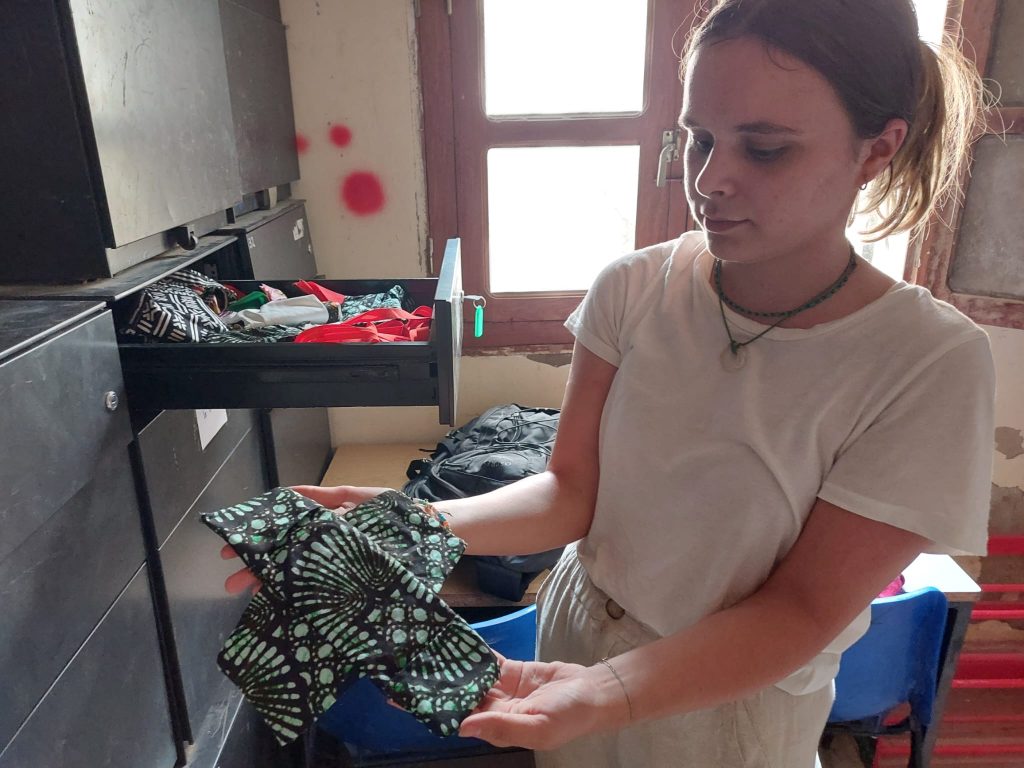
My Project Trust experience has been unforgettable. I have learnt more about the importance of culture, religion and languages in these past few months than I have throughout my whole lifetime. Connecting with people in Senegal has been simple in some ways yet challenging in others. We speak different languages, share different religions, eat different food and wear different clothes. However, we all have one belief in common, that a good education is a very powerful tool. Therefore, this has made it easy for me to implement this passion of mine onto committed and hardworking individuals. In my placement, I am teaching English in a community centre. However, my project doesnโt stop there as I have started an enterprise which makes reusable sanitary products for females in the community. As this is still a taboo subject within the area, often forcing girls to miss days off school each month, I quickly realised the importance of implementing a subtle and sustainable solution for the girls.
Approaching a year abroad at an older age has been really rewarding for me as I came into this year with more experience. Unlike younger volunteers who, for example, may be experiencing living away from home for the first time, I was already comfortable with this feeling therefore it has been less intimidating for me in this regard. That isnโt to say you wonโt learn anything during your year overseas. The possibility for personal growth is unmeasurable. I have learnt how resilient I can be, proving to myself that I can bounce back when things are challenging. I have enjoyed taking a year overseas after graduating university as I have viewed this year with a more focused outlook on what I want to do in my future career. This has meant I am continually thinking about the skills and knowledge that I am learning at my project and how this can be transferred and integrated into my job back home.
My year overseas was also very different to the usual year as I had to fundraise during a pandemic. This was an immense challenge as a lot of the typical fundraising opportunities were taken away from us. However, it was a chance for me to get creative. During your time at university, you meet many people and make countless connections. Therefore, I think fundraising during university only increases your chances as you have more networks. Although there are some clear obstacles with raising money at this age, such as your university peers being less likely to offer large donations, preparation and organisation is key here and if you can implement these factors then it is an achievable goal.

I would strongly encourage any graduates to embark on a year-long journey overseas with Project Trust as it can allow you to truly make a difference within the community and allows you to submerge yourself in a new culture. You will learn skills such as resilience, compassion, leadership, adaptability and interpersonal communication. I am very grateful for this opportunity as it has made me confident in my future career choice and has granted me the chance to fulfil my desire to live in a new and unique country while also enhancing my CV. The connections you make during your year abroad are simply not possible back home and I am confident that the knowledge I have learnt from the people I have met here will remain with me throughout both my working and personal life.
-
Senegal Stories


Current Senegal Volunteer Stephanie Wells kindly shares with us her experience of her PT placement thus far;
โThe opportunity to teach English locally and work alongside a rural community in Senegal has been valuable beyond belief. Iโve learnt about myself, developed huge independence, refined my spoken French and discovered what it really means to serve others. Below Iโd love to share a few highlights from my journey. All, I realise, have come from a realisation and cultivation of progress. You can find more on my blog senegaladventure.wordpress.com
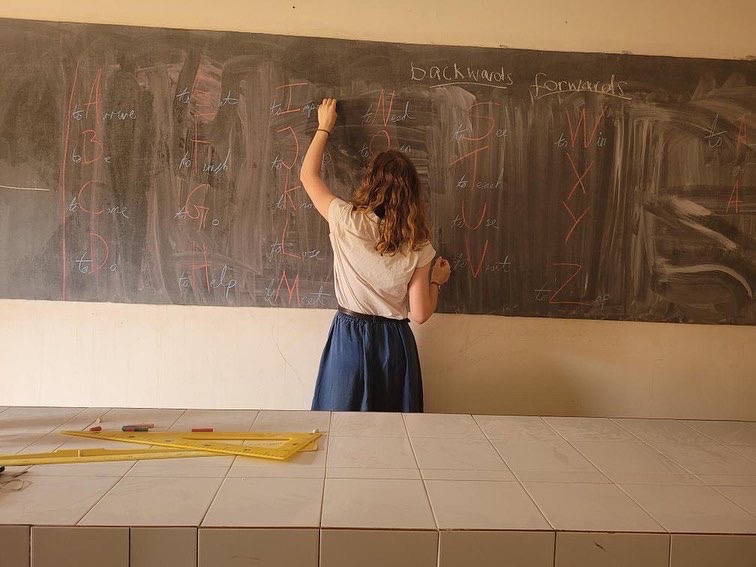
The first memorable moment, predictably, was my very first class. I walked in with advice from the week of training PT provided, a short TEFL course of theory, a detailed lesson plan, two cylinders of chalk in hand, and a heap of anticipation. I felt relatively well prepared. Nothing fully equipped me for that new feeling of leading a class though. My eyes darted around the room full of pupils, voice wavered while explaining, and my hands were so shaky writing the first exercise on the board a student couldnโt read it. โMadame Sali, I not understand.โ Salimata is the Muslim name I have been given here. Although nerve-wracking, I look back on this class – set on introductions and hobbies, I think – with such pride, because now – four months on – Iโm leading the same group with confidence and self-belief, alongside several others too. So much rests on the studentsโ attitude to learning, but, as the PT staff assured me back during training, a smile and some ideas to make the subject seem fun can go a long way. The students even stood up clapping at the end of a class they particularly enjoyed last week – we had made a dance together to act out the different prepositions.
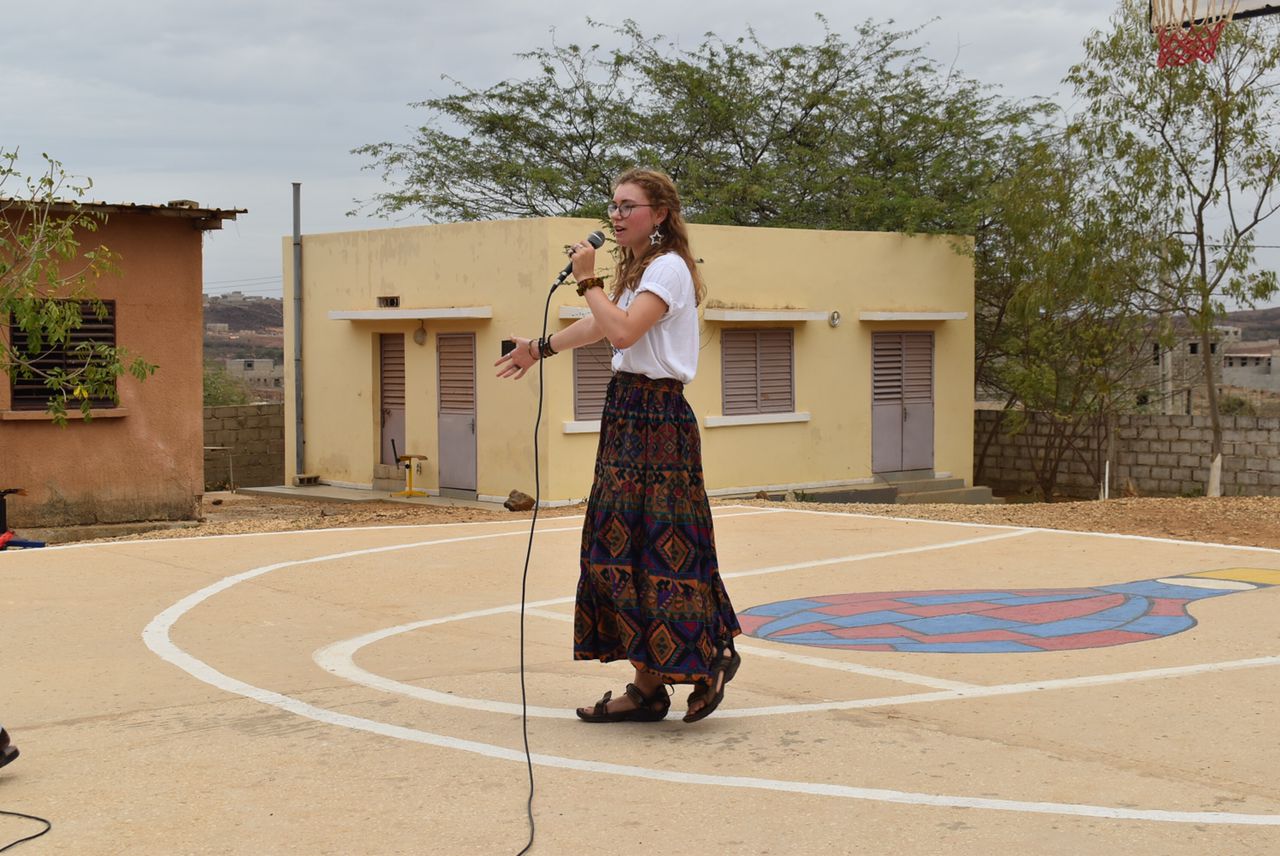
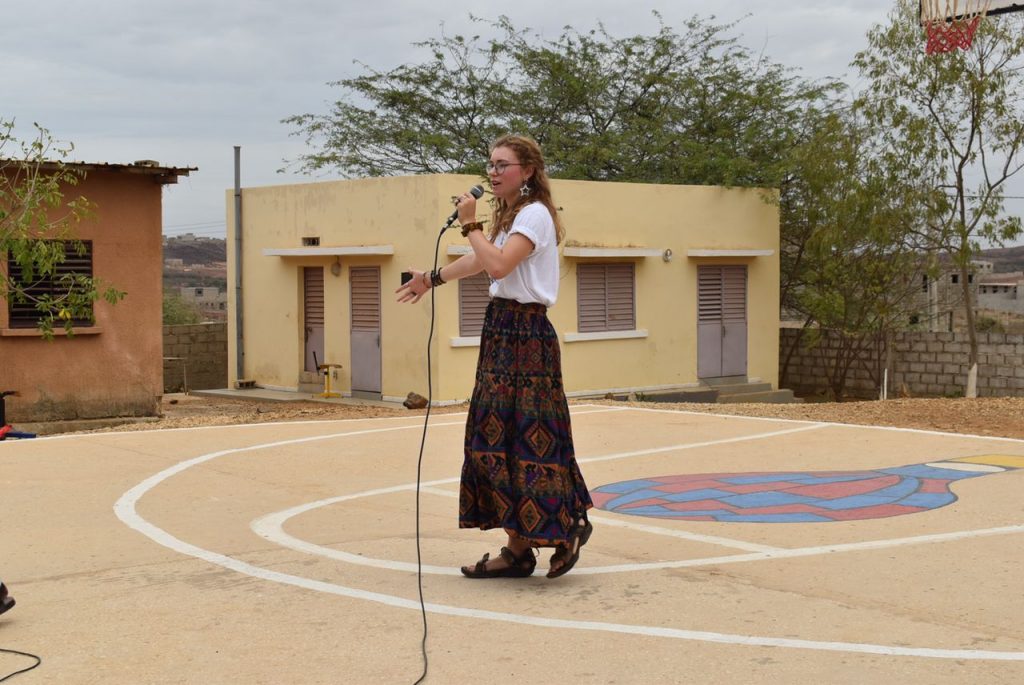
Speaking of dance, each returned volunteer Iโd heard from before departure told of making the project their own by bringing skills and talents to share with the establishment they were assigned to. Iโm a keen performer, so another joy Iโve found in the school has been launching and leading a dance club. Twice a week, a group of about ten of us assemble together on the school basketball court, often tired and dreary after a day of lessons. I blast some tunes through a little speaker and we get moving. Itโs the best feeling, seeing the energy and positivity thatโs created, and occasionally we even get the basketball club members joining in. As the groupโs improved Iโve given the reigns to them more and more with choreography. Often, when split into groups, they make some lovely pieces which they perform for one another at the end of the class. Alongside commitments at the Lycรฉe (high school) site, Iโve also helped out in a few P.E. classes, held on a spacious, sandy patch outside the villageโs small stadium, usually first thing in the morning. Although tiring, this has had similar morale-boosting effects for both parties involved.
A particularly rewarding aspect of teaching has been running 1-1 tutoring sessions, with students around school that find English particularly difficult. They fall behind for a number of reasons; often because of missed classes due to school strikes or a complicated home life, or sometimes itโs a lack of self-esteem and confidence to speak up in class. Through the intense nature of these sessions – a stark contrast to teaching a room full of seventy students – I have been able to give them sessions tailored to exactly what they need to work on, as well as provide lots of verbal practice of the language – sometimes neglected in big class settings. One example is Fatou, a fifteen year old Iโve been working with since early January. Her written English was strong, but speaking was a challenge, and she was slow and tentative to form full sentences. Weโve been covering vocab and topics such as school, routines and interests, all in a verbal format. Last Wednesday she performed her full daily routine for me, announcing each part in complete, detailed sentences as she acted it out, using items around us in the library as props.
As Iโve got to know members of the local community, a few individuals have expressed a desire to learn some spoken English too. So much so that my repertoire of weekly students now extends to a clothes vendor I once bought a shirt from, and a young mum of seven down the street from our family home. The latter of these, named Awa, rarely gets the opportunity to leave her home except for food shopping. Weโve befriended each other and exchange lessons. Iโve loved getting to know her, through a combination of broken French and Wolof, the mother tongue, and she teaches me this with a fierce attention to pronunciation – I couldnโt be more grateful. Hearing the slow but steady progress she makes each week in English gives me such a boost, and itโs amazing to hear it does the same for her. After a brief session on a Sunday afternoon, where we covered a bit of Geography and vocabulary describing distance, she once said to me in French, โYouโre bringing the world to me, Sali.โ

As well as building public speaking and improvisation skills, teaching has also given me a profound appreciation, in retrospect, for the teachers Iโve been taught by in the past. Ironically, I think the students I see on a weekly basis have unknowingly taught me far more than Iโve taught them, but thatโs the beauty of spending a year in a profoundly different environment. The challenges crop up in unexpected places but learning to navigate them has also been a form of schooling in and of itself. Iโve grown to understand the intricacies of the roles of Teacher and Student; the border between them is not clear cut, and lessons extend far beyond the realms of a concrete classroom. I have no doubt this unique experience with Project will encourage all of us volunteers to throw ourselves in to any educational opportunities in the future – whether they lie within or beyond the boundary of our comfort zone.โ
-
A Day In The Life…

Current Volunteers Choe Hood & Ella Fraser share with us a day in the life of a teacher volunteer…
They are currently volunteering in Ghana, and both are living in the Volta region, In a small town called ‘Akatsi’. Chloe is teaching English and Ella is teaching Maths in a basic school. Monday โ Friday.

Chloe Hood โOur alarms go off at 6am and we often get up and sweep the compound outside the house. Some days are definitely harder to get out of bed than others. It’s tradition that the women especially must do so before anything else. We sweep the sand, to make the compound look clean and tidy. We have a small gas container so often put some water in the pot to heat up so that we can have a tea on our walk to school. We like to walk to school in the morning, as it’s the only time that the heat is bearable to walk in. On our walk, we often pick up a local Ghanaian breakfast, the lady expects us most mornings! Our students line up under the tree for assembly each morning and sing a few songs before starting lessons at 8am. We often finish the songs with a prayer…. Lovely start to the day! Primary school tends to work per level rather than age. You start school, when you can afford to do so however as of 2017 our school changed to a government school, which is one of the very few schools around our town, that is free. We are teaching primary six, age ranged from around 11-17. We have a timetable and teach one lesson a day. However, in-between we often help in other classes. While we aren’t teaching, we plan our lessons, read our books, or write a diary. Break and lunch time is always fun! Although it’s very hot, we often play with the children. We’ve taught them a numerous amount of team games such as, rounders, capture the flag, football, table tennis, skipping etc. When we first came to the school, it had no P.E equipment whatsoever. We have introduced a library lesson to our school. The children are growing and learning more each day. We found that their facts were always pretty good however their creative writing skills were what needing improved. This was purely due to lack of reading, not having the chance to have seen a movie etc. As well as teaching English, during the week we have been asked to do P.S.E and on a Friday we are the dedicated P.E teachers. We often eat the local Ghanaian dishes while at school. When you are eating, it is expected that you “Invite” the other teachers to join. We finish teaching around 2pm. Everyday, we go to a little stall to get a fanIce, which is a lovely ice lolly to cool us down! Depending on the temperature, we then decided if we are walking or taking a transport home. As you walk the streets, everyone will greet you. Everyone you pass, will welcome you. We have never met a friendlier community. Before coming to Ghana, we felt scared of my safety but actually we haven’t once felt unsafe in our community. The locals look out for you, more than we could ever imagine. They all treat us as if we are their own family.

Ella Fraser Once we are home, we often cook lunch and sometimes we cook for the children in our community if their parents are not home. Some days, we head out around 4pm with the children in the community and play games with them at the local “Football pitch” – sand pitch. Although, some days we are very tired due to the heat, and we will come home and sleep for a few hours and just rest! Each day tends to be different. We cook around 6pm, as we often try and have an early night before a busy day the next day.โ